
Acute Coronary Syndrome
Acute coronary syndrome means blood flow to the heart is suddenly reduced. It includes heart attack and unstable angina and is a medical emergency.
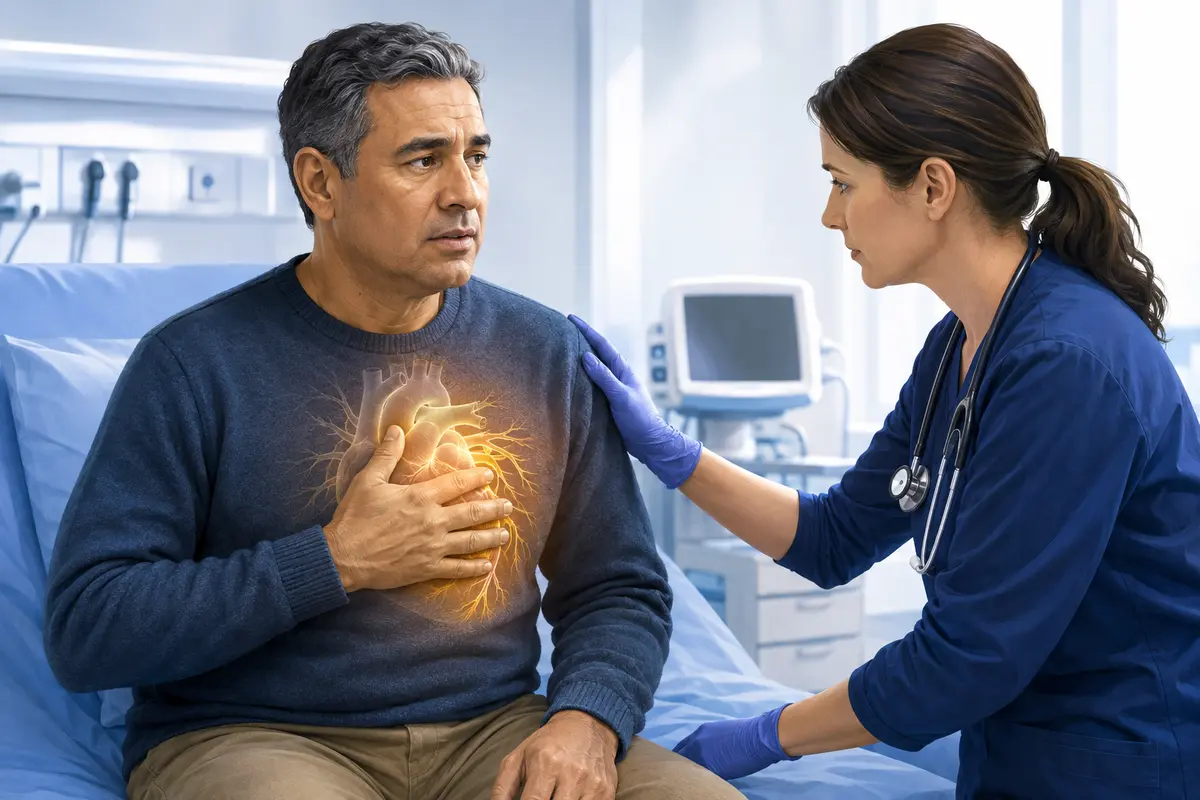
About acute coronary syndrome
Acute coronary syndrome means blood flow to the heart is suddenly reduced. It includes heart attack and unstable angina and is a medical emergency.
What can cause it?
Acute coronary syndrome usually occurs when a fatty plaque in a heart artery ruptures and a blood clot suddenly reduces blood flow.
It includes unstable angina and heart attack and cannot be safely diagnosed at home or in a routine office setting.
What a patient may notice
Symptoms vary from person to person. Possible signs may include:
- Chest pressure, squeezing, heaviness, or pain
- Pain spreading to the arm, back, neck, jaw, or stomach
- Shortness of breath, sweating, nausea, or lightheadedness
How clinicians find the cause
Emergency evaluation includes an electrocardiogram (ECG), repeated blood tests for heart injury such as troponin, vital signs, and continuous monitoring. Chest imaging, echocardiography, stress testing, CT angiography, or cardiac catheterization may be needed.
Treatment and next steps
- 1
Call 911 so emergency treatment can begin and transport is monitored.
- 2
Hospital treatment may include medicines to limit clotting and heart strain, oxygen when needed, and urgent procedures to restore blood flow.
- 3
Treatment depends on ECG findings, blood tests, symptoms, bleeding risk, and coronary anatomy.
Supporting recovery
- Do not drive yourself and do not wait for symptoms to pass.
- If a clinician has given you a personal emergency heart plan, follow it while 911 is being called.
- Bring or communicate allergies, medicines, prior heart procedures, and the time symptoms began.
What to expect
The outlook depends on how quickly blood flow is restored, how much heart muscle is affected, and the person's overall health. Calling 911 and receiving immediate hospital treatment improves the chance of limiting heart damage. Ongoing cardiology care, prescribed medicines, and cardiac rehabilitation support recovery and reduce future risk.
Possible complications
- Dangerous heart rhythms that may cause fainting or cardiac arrest
- Heart failure or cardiogenic shock
- Another heart attack, ongoing chest pain, or damage to the heart muscle
When to Contact a Medical Professional
This condition can be life-threatening. Call 911 or go to the nearest emergency department. Do not delay care to visit urgent care.
Call 911 immediately. Do not drive yourself or wait to see if symptoms go away.Get emergency help for severe trouble breathing, new chest pressure, fainting, seizure, sudden weakness on one side, uncontrolled bleeding, blue or gray lips, or a person who is difficult to wake.
Ways to lower risk
- Control blood pressure, cholesterol, and diabetes with a healthcare professional.
- Avoid tobacco, stay active as medically advised, choose a heart-healthy diet, and take prescribed heart medicines consistently.
Trusted health information
This CHS patient-education page uses original wording and links to MedlinePlus for additional information.