
Acute Respiratory Distress Syndrome
Acute respiratory distress syndrome (ARDS) is a life-threatening lung condition in which oxygen cannot adequately reach the blood.
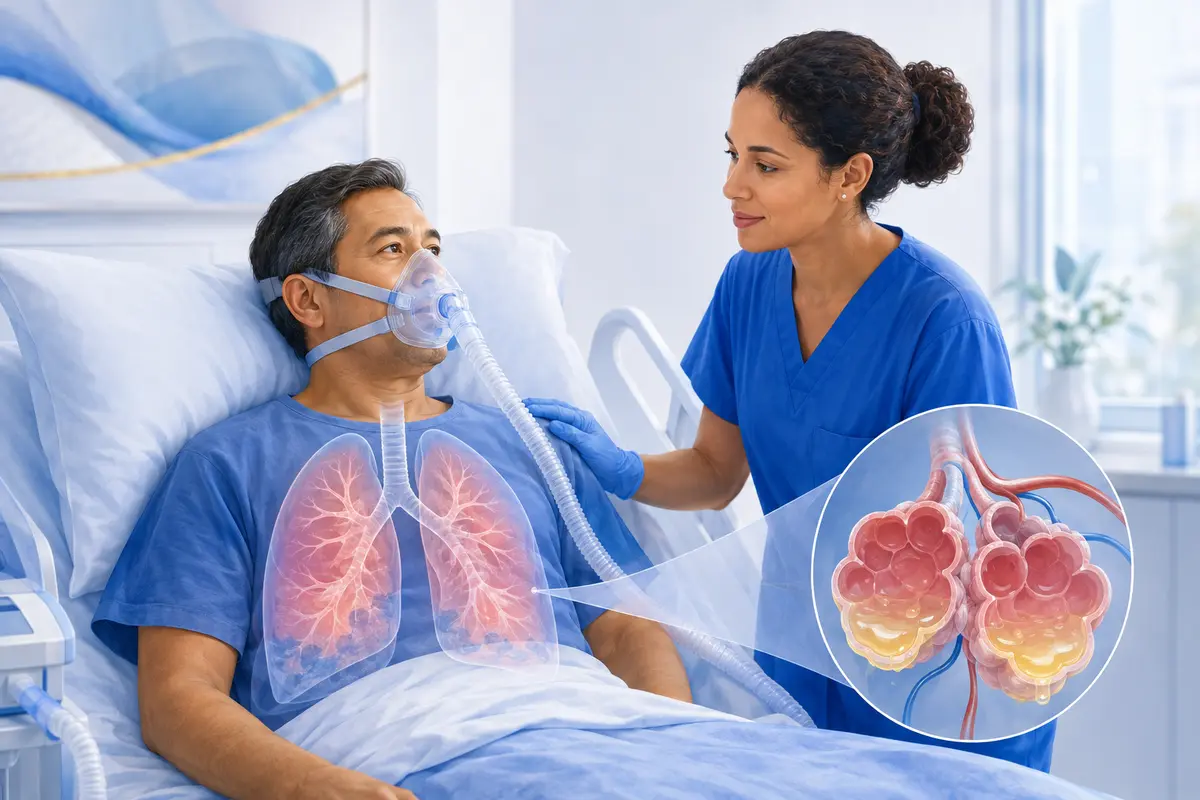
About acute respiratory distress syndrome
Acute respiratory distress syndrome (ARDS) is a life-threatening lung condition in which oxygen cannot adequately reach the blood.
What can cause it?
ARDS can follow severe pneumonia, sepsis, aspiration, major trauma, pancreatitis, smoke inhalation, or another critical illness.
Inflammation makes the lungs leaky and stiff, causing dangerously low oxygen levels.
What a patient may notice
Symptoms vary from person to person. Possible signs may include:
- Severe shortness of breath
- Fast or labored breathing
- Blue or gray lips, confusion, or low blood pressure
How clinicians find the cause
ARDS is diagnosed in a hospital using oxygen measurements, chest imaging, blood tests, heart assessment, and the timing of lung symptoms after a serious illness or injury. Clinicians also rule out other causes of fluid in the lungs.
Treatment and next steps
- 1
ARDS requires intensive hospital care and treatment of the underlying cause.
- 2
Support may include high-flow oxygen, mechanical ventilation, positioning strategies, careful fluid management, and treatment for infection or shock.
- 3
There is no safe home treatment for ARDS.
Supporting recovery
- Call 911 for severe breathing difficulty or blue or gray lips.
- Do not drive a severely short-of-breath person to urgent care.
- After recovery, follow pulmonary rehabilitation, oxygen, medication, and activity instructions.
What to expect
ARDS is a critical illness, and recovery depends on its severity, the underlying illness, the organs involved, age, and overall health. Many survivors regain most lung function, but recovery may take months and can include weakness, fatigue, breathing limitations, memory or concentration problems, anxiety, depression, or post-traumatic stress. Rehabilitation and coordinated follow-up are often important after discharge.
Possible complications
- Failure of the kidneys, heart, liver, or other organ systems
- Collapsed lung, ventilator-associated pneumonia, blood clots, or other complications of critical care
- Lung scarring, persistent weakness, cognitive changes, anxiety, depression, or post-traumatic stress after recovery
When to Contact a Medical Professional
This condition can be life-threatening. Call 911 or go to the nearest emergency department. Do not delay care to visit urgent care.
Call 911 immediately. ARDS requires hospital treatment.Get emergency help for severe trouble breathing, new chest pressure, fainting, seizure, sudden weakness on one side, uncontrolled bleeding, blue or gray lips, or a person who is difficult to wake.
Ways to lower risk
- Reduce infection risk with recommended vaccination and hand hygiene.
- Avoid smoking and inhaled toxins.
- Seek early care for severe infection, aspiration, or breathing problems.
Trusted health information
This CHS patient-education page uses original wording and links to MedlinePlus for additional information.