
Allergic Rhinitis
Allergic rhinitis is inflammation inside the nose caused by allergens such as pollen, dust mites, mold, or animals.
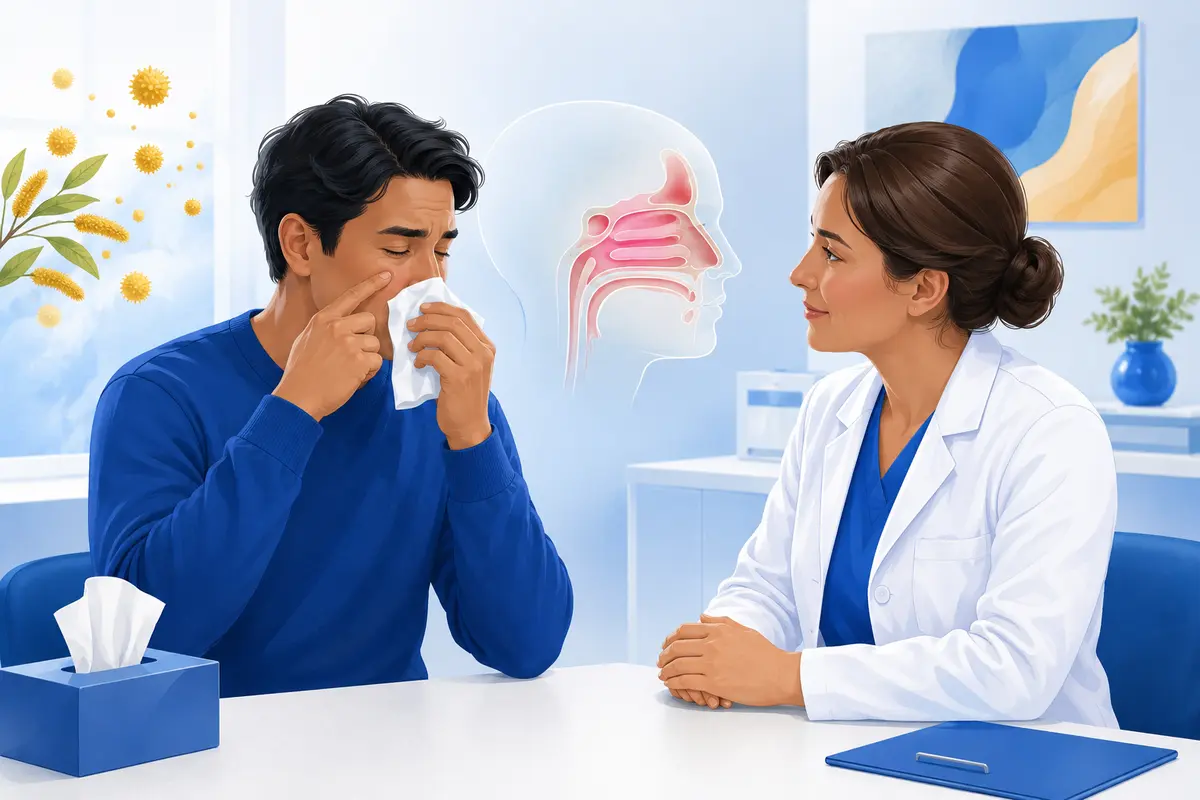
About allergic rhinitis
Allergic rhinitis is inflammation inside the nose caused by allergens such as pollen, dust mites, mold, or animals.
What can cause it?
Seasonal triggers include tree, grass, and weed pollen; year-round triggers include dust mites, mold, cockroaches, and animal dander.
The immune response causes swelling and mucus production inside the nose.
What a patient may notice
Symptoms vary from person to person. Possible signs may include:
- Sneezing and an itchy or runny nose
- Nasal congestion
- Watery or itchy eyes
How clinicians find the cause
Diagnosis is usually based on symptom pattern, nasal examination, and exposure history. Skin or blood allergy testing may help when symptoms are persistent, severe, or the trigger is uncertain.
Treatment and next steps
- 1
Treatment may combine trigger reduction, saline nasal care, and clinician-recommended antihistamines or nasal medicines.
- 2
Some patients benefit from allergy immunotherapy after specialist evaluation.
- 3
Correct nasal-spray technique improves effectiveness and reduces irritation.
Supporting recovery
- Check pollen reports and close windows during high-count periods.
- Shower and change clothes after prolonged outdoor exposure.
- Use saline only with distilled, sterile, or properly boiled and cooled water.
What to expect
Most allergic rhinitis symptoms can be controlled with trigger reduction and correctly used medicines. Seasonal symptoms may return during the same pollen periods each year, while dust mites, mold, or animal dander may cause symptoms throughout the year. Some children become less sensitive over time, but many people need an ongoing prevention and treatment plan.
Possible complications
- Poor sleep, fatigue, difficulty concentrating, or reduced school and work performance
- Repeated sinus or ear problems caused by ongoing nasal swelling
- Worsening asthma symptoms or more frequent asthma flare-ups
When to Contact a Medical Professional
A healthcare professional can confirm the cause, discuss appropriate testing, and create a treatment or prevention plan for you.
Get emergency help for severe trouble breathing, new chest pressure, fainting, seizure, sudden weakness on one side, uncontrolled bleeding, blue or gray lips, or a person who is difficult to wake.
Ways to lower risk
- Use mattress and pillow covers and wash bedding regularly when dust mites are a trigger.
- Control indoor moisture and repair leaks to reduce mold.
Trusted health information
This CHS patient-education page uses original wording and links to MedlinePlus for additional information.