
Animal Bite
Animal bites can damage skin and deeper tissues and may expose a person to bacteria, tetanus, or rabies.
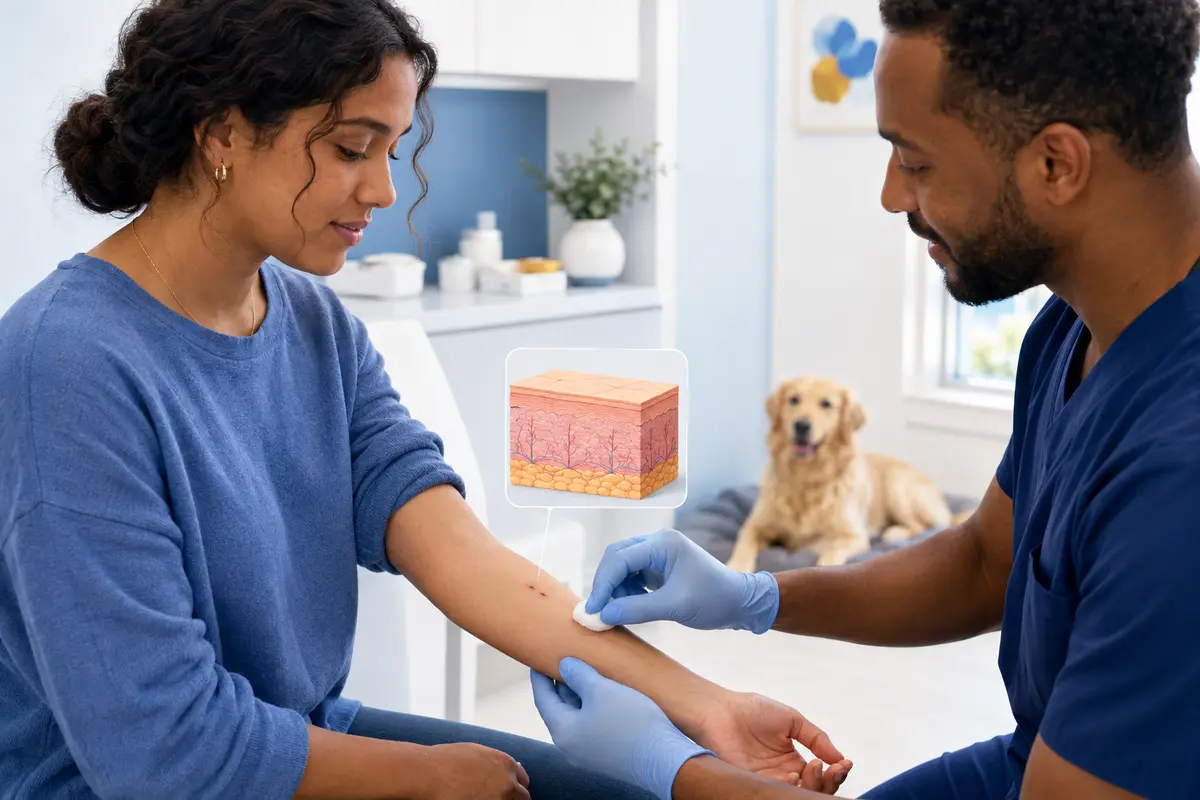
About animal bite
Animal bites can damage skin and deeper tissues and may expose a person to bacteria, tetanus, or rabies.
What can cause it?
Bites can crush or puncture tissue and introduce bacteria from the animal's mouth.
Rabies risk depends on the animal, its behavior, vaccination status, local public-health guidance, and whether it can be observed or tested.
What a patient may notice
Symptoms vary from person to person. Possible signs may include:
- Puncture wound, cut, bruising, or pain
- Redness, warmth, swelling, or drainage
- Fever or red streaks from the wound
How clinicians find the cause
The clinician evaluates depth, location, nerve and tendon function, blood flow, infection signs, tetanus status, and rabies exposure. X-ray may be needed for bone injury, a foreign body, or a bite near a joint.
Treatment and next steps
- 1
Wounds are cleaned thoroughly; some need irrigation, repair, antibiotics, or specialist care.
- 2
Tetanus vaccination and rabies preventive treatment are given when indicated.
- 3
Hand, face, joint, deep puncture, or infected bites need especially careful assessment.
Supporting recovery
- Wash immediately with soap and running water, then cover with a clean dressing.
- Use direct pressure for bleeding.
- Report the animal and exposure as directed by local public health; do not attempt to capture a dangerous animal.
What to expect
Most minor bites heal well when the wound is cleaned promptly and infection, tetanus, and rabies risks are addressed. Deep punctures, crush injuries, hand or facial bites, and bites in people with diabetes or immune problems may take longer to heal and need closer follow-up.
Possible complications
- Skin, tendon, joint, bone, or bloodstream infection
- Nerve, tendon, blood-vessel, or cosmetic injury from a deep or facial bite
- Tetanus or rabies when indicated preventive treatment is not received
When to Contact a Medical Professional
A same-day medical evaluation is recommended, especially when symptoms are severe, worsening, or accompanied by fever, vomiting, weakness, or significant pain.
Call 911 for uncontrolled bleeding or a severe attack. Possible rabies exposure, deep wounds, or bites to the face or hand need prompt medical care.Get emergency help for severe trouble breathing, new chest pressure, fainting, seizure, sudden weakness on one side, uncontrolled bleeding, blue or gray lips, or a person who is difficult to wake.
Ways to lower risk
- Supervise children around animals and avoid approaching unfamiliar, sick, or wild animals.
- Keep pets vaccinated and follow safe handling practices.
Trusted health information
This CHS patient-education page uses original wording and links to MedlinePlus for additional information.