
Asthma - Child
Childhood asthma causes episodes of airway swelling and narrowing. Symptoms may be triggered by illness, exercise, allergens, smoke, or weather changes.
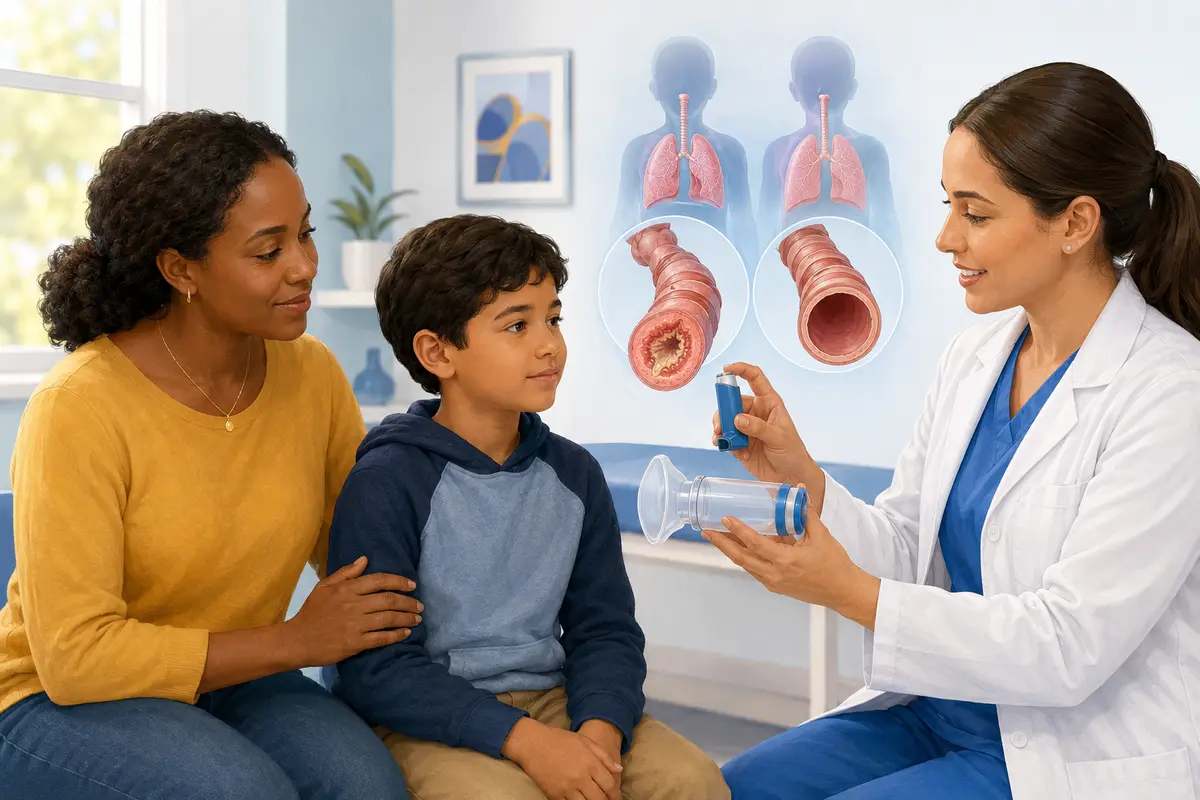
About asthma - child
Childhood asthma causes episodes of airway swelling and narrowing. Symptoms may be triggered by illness, exercise, allergens, smoke, or weather changes.
What can cause it?
Childhood asthma causes sensitive airways to swell and tighten.
Viral infections, exercise, allergens, smoke, weather changes, and strong odors are common triggers.
What a patient may notice
Symptoms vary from person to person. Possible signs may include:
- Wheezing or frequent cough
- Fast breathing or chest pulling in with breaths
- Trouble keeping up with activity or sleeping because of cough
How clinicians find the cause
The clinician reviews cough and wheeze patterns, nighttime symptoms, family history, triggers, and response to medicine. Children old enough to perform lung-function testing may have spirometry; younger children are often diagnosed from history and response over time.
Treatment and next steps
- 1
Treatment may include a quick-relief inhaler and a daily controller medicine based on symptom frequency and attack risk.
- 2
Parents, school staff, and caregivers should have an age-appropriate written asthma action plan.
- 3
Correct mask, spacer, and inhaler technique must be checked regularly.
Supporting recovery
- Give medicines exactly as prescribed and track rescue treatments.
- Keep the child away from smoke and vaping aerosols.
- Encourage normal activity when asthma is controlled and use pre-exercise medicine only as directed.
What to expect
With proper treatment, most children with asthma can participate in school, sports, and normal activities. Symptoms lessen or disappear in some children as they grow, while others continue to have asthma as adults. Ongoing follow-up helps protect lung health and keeps treatment matched to the child's needs.
Possible complications
- Severe attacks that require emergency care, hospitalization, or breathing support
- Missed school, disrupted sleep, and limits on play or sports when symptoms are not controlled
- Lasting lung problems when asthma remains poorly controlled
When to Contact a Medical Professional
Arrange an evaluation when symptoms are new, worsening, interfering with normal activities, or not improving as expected.
Call 911 if the child struggles to breathe, cannot speak or drink, has blue or gray lips, becomes unusually sleepy, or does not improve with the prescribed rescue plan.Get emergency help for severe trouble breathing, new chest pressure, fainting, seizure, sudden weakness on one side, uncontrolled bleeding, blue or gray lips, or a person who is difficult to wake.
Ways to lower risk
- Reduce confirmed triggers without unnecessarily limiting school or play.
- Keep vaccines current and manage allergies when they worsen asthma.
- Ensure school and childcare have current medicines and instructions.
Trusted health information
This CHS patient-education page uses original wording and links to MedlinePlus for additional information.