
Athlete's Foot
Athlete's foot is a contagious fungal infection of the skin, usually between the toes or on the soles.
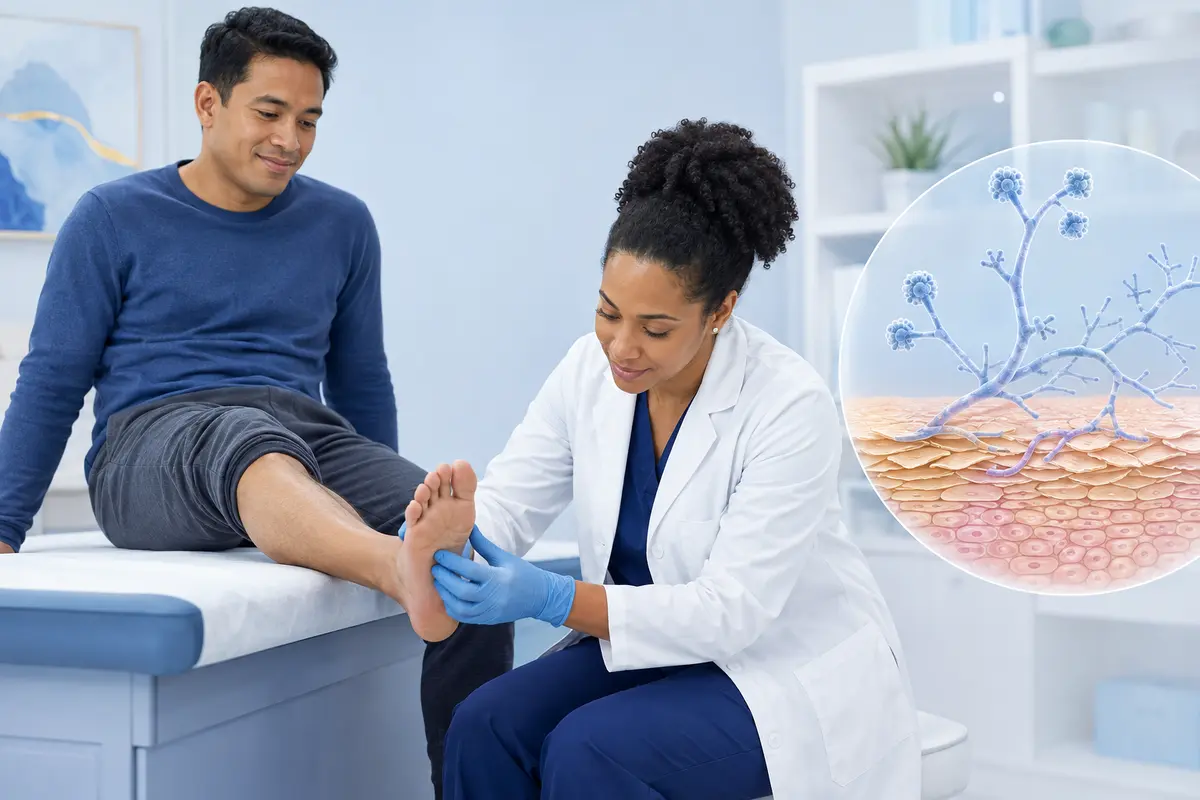
About athlete's foot
Athlete's foot is a contagious fungal infection of the skin, usually between the toes or on the soles.
What can cause it?
Athlete's foot is caused by dermatophyte fungi that thrive in warm, moist environments.
It can spread through direct contact and contaminated floors, shoes, towels, or clothing.
What a patient may notice
Symptoms vary from person to person. Possible signs may include:
- Itching, burning, or stinging
- Peeling, cracking, or scaly skin
- Redness or small blisters
How clinicians find the cause
A clinician often diagnoses it by skin appearance and location. Skin scraping may be examined or cultured when the diagnosis is unclear, treatment fails, or another rash is possible.
Treatment and next steps
- 1
Topical antifungal medicine is commonly used for mild infection; treatment should continue for the recommended duration even after symptoms improve.
- 2
More extensive or resistant infection may need prescription or oral treatment.
- 3
Steroid cream alone can worsen or mask a fungal infection.
Supporting recovery
- Wash and dry feet carefully, especially between the toes.
- Change damp socks and rotate breathable shoes.
- Do not share towels, socks, or footwear.
What to expect
Athlete's foot almost always improves with appropriate antifungal treatment and careful foot care, but it can return. Continue treatment for the full recommended time and keep the feet dry. Recurrent or resistant infection may need prescription medicine and evaluation for fungal nail infection.
Possible complications
- Spread to the toenails, hands, groin, or other skin areas
- A secondary bacterial infection through cracked or scratched skin
- Repeated or persistent infection, especially when feet stay warm and moist
When to Contact a Medical Professional
Mild symptoms may sometimes be managed with general supportive care, but a clinician should evaluate symptoms that persist, spread, become painful, or worsen.
Seek care for spreading redness, pus, fever, severe pain, or if you have diabetes or poor circulation.Get emergency help for severe trouble breathing, new chest pressure, fainting, seizure, sudden weakness on one side, uncontrolled bleeding, blue or gray lips, or a person who is difficult to wake.
Ways to lower risk
- Wear sandals in communal showers and locker rooms.
- Keep feet dry and use antifungal powder if recommended for recurrent infection.
- Treat fungal toenails or recurrent household spread with clinician guidance.
Trusted health information
This CHS patient-education page uses original wording and links to MedlinePlus for additional information.