
Atopic Dermatitis
Atopic dermatitis, also called eczema, is a chronic condition that causes dry, inflamed, itchy skin.
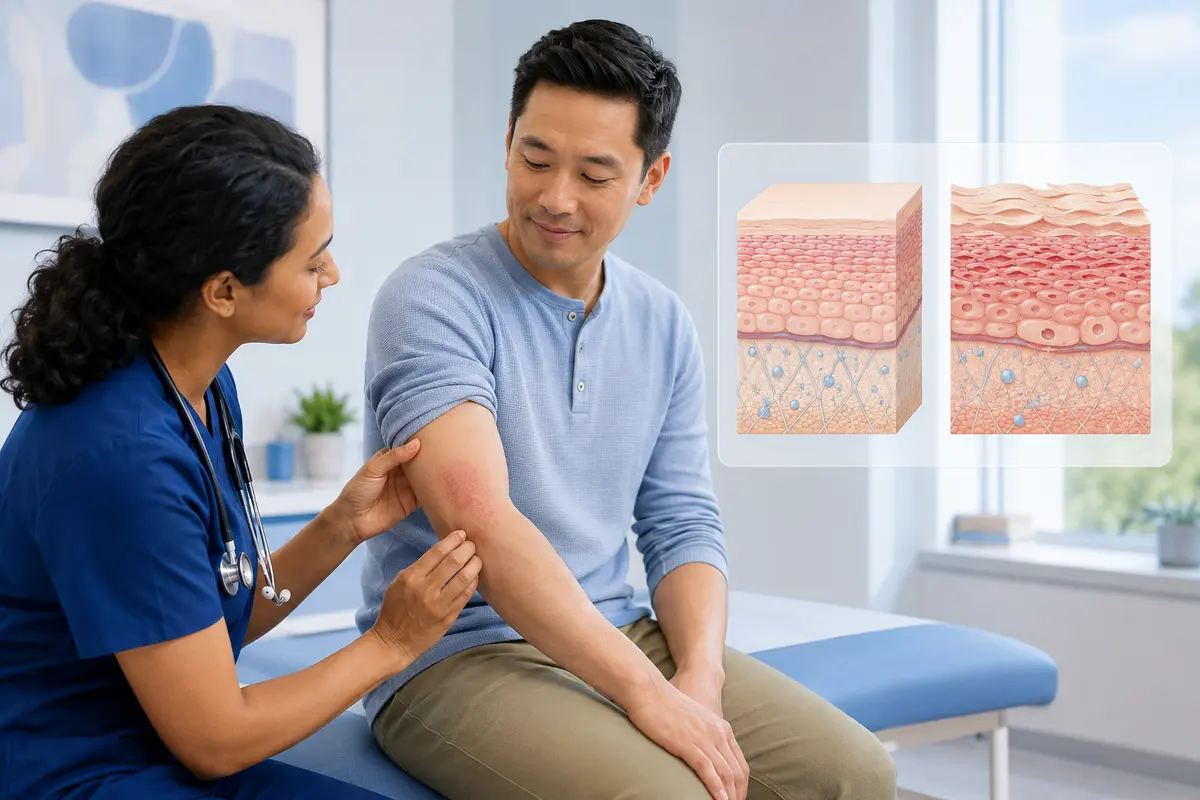
About atopic dermatitis
Atopic dermatitis, also called eczema, is a chronic condition that causes dry, inflamed, itchy skin.
What can cause it?
Atopic dermatitis reflects a weakened skin barrier and an overactive inflammatory response.
Dry air, heat, sweat, fragrances, harsh soaps, scratching, stress, and some allergens or infections can trigger flares.
What a patient may notice
Symptoms vary from person to person. Possible signs may include:
- Dry, itchy patches
- Redness, thickened skin, or small bumps
- Crusting or oozing after scratching
How clinicians find the cause
Diagnosis is usually based on the rash pattern, itching, age of onset, personal or family allergy history, and examination. Allergy testing is not routinely needed unless a specific trigger is strongly suspected.
Treatment and next steps
- 1
Daily moisturization and trigger reduction form the foundation of care.
- 2
Clinicians may prescribe topical anti-inflammatory medicines, infection treatment, light therapy, or systemic medicine for more severe disease.
- 3
A written flare plan helps patients know what to use and for how long.
Supporting recovery
- Use short lukewarm baths or showers and apply fragrance-free moisturizer immediately afterward.
- Choose gentle fragrance-free cleansers and detergents.
- Keep nails short and use cool compresses or wet-wrap therapy only as directed.
What to expect
Atopic dermatitis is often a long-term or recurring condition. Consistent moisturization, avoiding irritants, and using treatment early can reduce itching and flares. Many children improve as they grow, while adults may continue to have periods of clearer skin followed by flare-ups.
Possible complications
- Skin infection caused by bacteria, viruses, or fungi
- Scarring or lasting skin-color changes after repeated scratching and inflammation
- Sleep loss, reduced quality of life, or side effects from long-term medicine use
When to Contact a Medical Professional
A healthcare professional can confirm the cause, discuss appropriate testing, and create a treatment or prevention plan for you.
Prompt care is needed for fever, rapidly spreading redness, increasing pain, pus, or widespread blistering.Get emergency help for severe trouble breathing, new chest pressure, fainting, seizure, sudden weakness on one side, uncontrolled bleeding, blue or gray lips, or a person who is difficult to wake.
Ways to lower risk
- Moisturize even when the skin looks clear.
- Avoid known irritants, overheating, and scratching.
- Treat early signs of a flare according to the clinician's plan.
Trusted health information
This CHS patient-education page uses original wording and links to MedlinePlus for additional information.