
Baker Cyst
A Baker cyst is a fluid-filled swelling behind the knee, often related to inflammation or another knee problem.
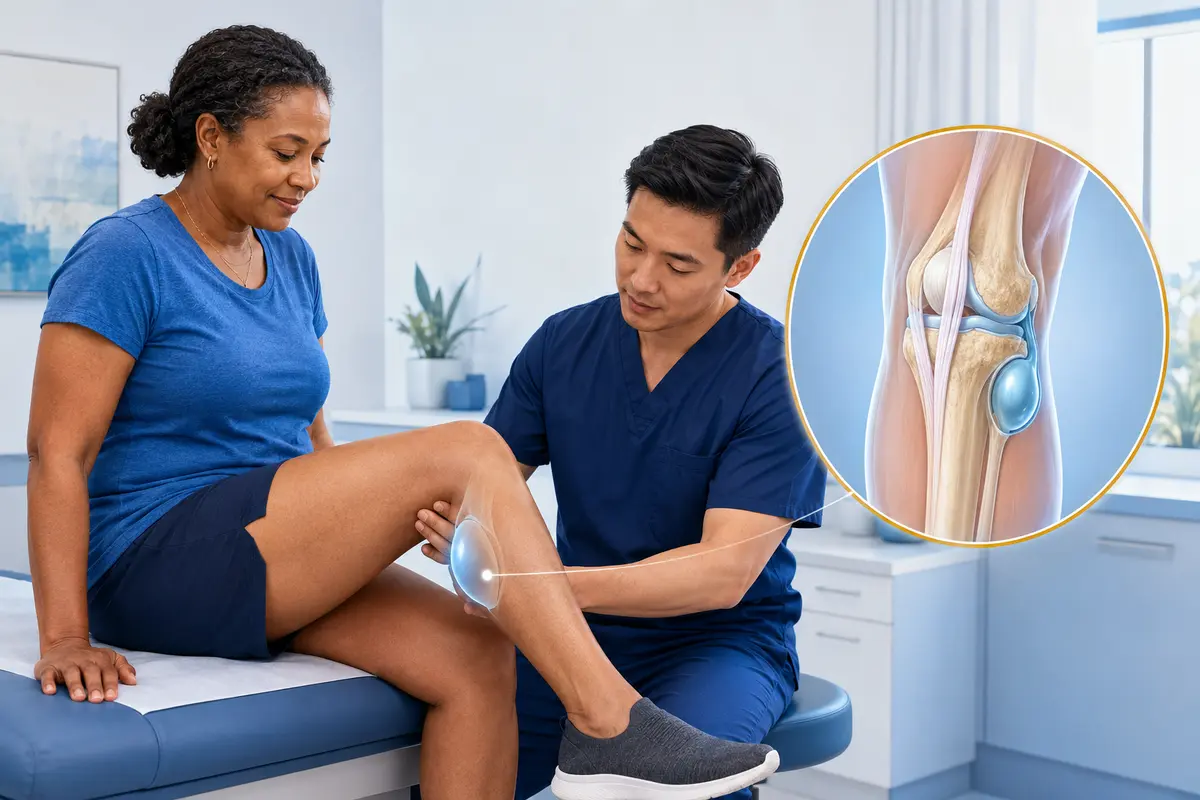
About baker cyst
A Baker cyst is a fluid-filled swelling behind the knee, often related to inflammation or another knee problem.
What can cause it?
A Baker cyst forms when extra knee-joint fluid collects behind the knee.
Arthritis, cartilage injury, inflammation, or another knee problem often drives the fluid buildup.
What a patient may notice
Symptoms vary from person to person. Possible signs may include:
- A soft lump or fullness behind the knee
- Tightness, stiffness, or pain
- Swelling that changes with activity
How clinicians find the cause
Examination focuses on the knee and calf. Ultrasound can confirm fluid and help distinguish a cyst from a blood clot; x-ray or MRI may identify the underlying knee condition.
Treatment and next steps
- 1
Treatment targets the knee problem and may include activity modification, physical therapy, or clinician-guided anti-inflammatory care.
- 2
A large painful cyst may be drained or treated with an injection in selected patients, but it can return.
- 3
Surgery is uncommon unless another repairable knee problem is present.
Supporting recovery
- Reduce activities that increase swelling and elevate the leg.
- Apply wrapped ice for short periods after activity.
- Avoid massaging a suddenly swollen calf until a blood clot has been ruled out.
What to expect
A Baker cyst is benign and usually does not cause long-term harm. Symptoms may come and go, and many people improve when the underlying knee inflammation or injury is treated. The cyst can return after drainage if the knee problem continues.
Possible complications
- Rupture of the cyst with sudden pain, bruising, and swelling in the calf
- Compression of nearby nerves or blood vessels from a very large cyst
- Persistent or recurrent swelling when the underlying knee condition remains active
When to Contact a Medical Professional
Arrange an evaluation when symptoms are new, worsening, interfering with normal activities, or not improving as expected.
Sudden calf swelling, redness, warmth, chest pain, or shortness of breath needs urgent evaluation because a blood clot can cause similar symptoms.Get emergency help for severe trouble breathing, new chest pressure, fainting, seizure, sudden weakness on one side, uncontrolled bleeding, blue or gray lips, or a person who is difficult to wake.
Ways to lower risk
- Manage arthritis and knee injuries early.
- Build strength and flexibility around the knee with an approved exercise plan.
Trusted health information
This CHS patient-education page uses original wording and links to MedlinePlus for additional information.