
Balanitis
Balanitis is inflammation of the head of the penis. Causes may include irritation, infection, or an underlying skin or medical condition.
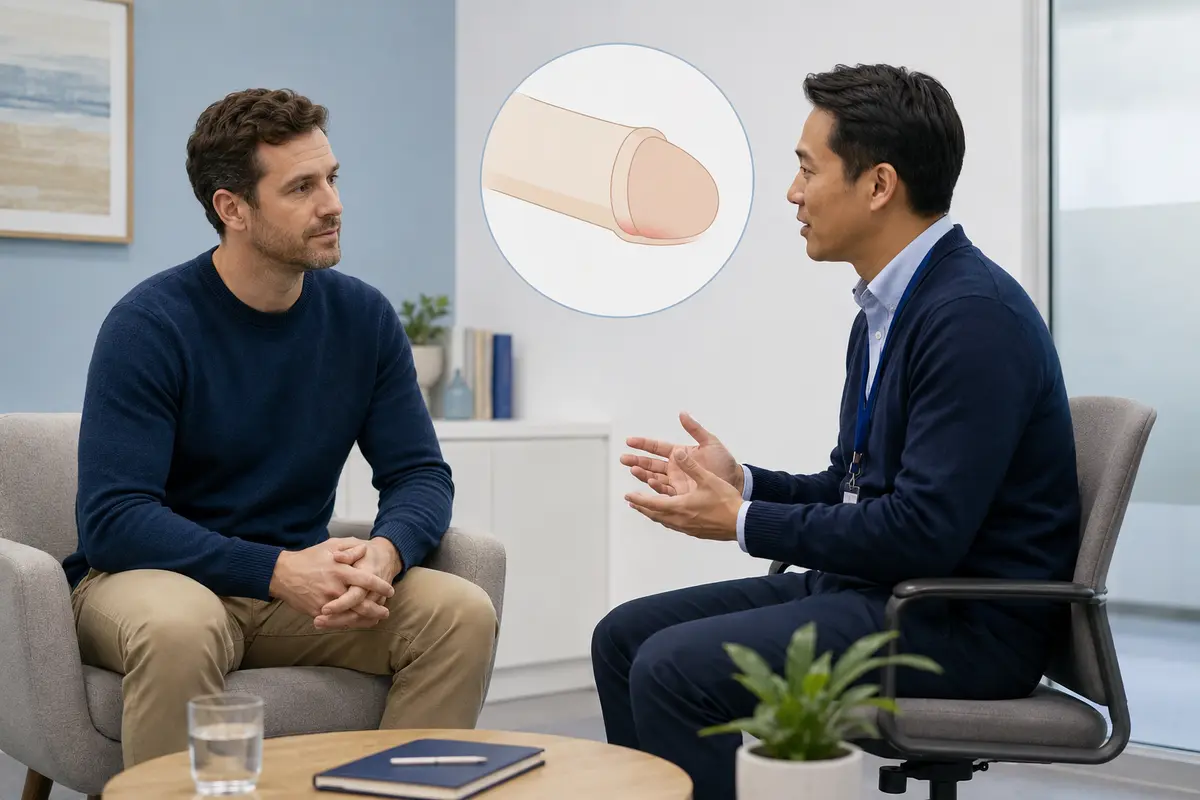
About balanitis
Balanitis is inflammation of the head of the penis. Causes may include irritation, infection, or an underlying skin or medical condition.
What can cause it?
Balanitis may result from yeast or bacterial infection, irritation from soap or products, skin disease, poor drainage under a tight foreskin, or uncontrolled diabetes.
STIs can cause similar symptoms and may need testing.
What a patient may notice
Symptoms vary from person to person. Possible signs may include:
- Redness, swelling, or soreness
- Itching, discharge, or unpleasant odor
- Pain with urination or difficulty retracting the foreskin
How clinicians find the cause
A clinician examines the penis and reviews hygiene products, sexual exposures, diabetes risk, and medicines. A swab, urine test, blood-glucose test, or STI testing may be recommended.
Treatment and next steps
- 1
Treatment depends on the cause and may include gentle hygiene, antifungal treatment, antibiotics, or a prescribed anti-inflammatory medicine.
- 2
Avoid using steroid, antibiotic, or antifungal creams without knowing the likely cause.
- 3
Recurrent or severe cases may need urology or dermatology care.
Supporting recovery
- Gently rinse with water and dry thoroughly; avoid fragranced soaps on inflamed skin.
- Do not force back a foreskin that is painful or tight.
- Avoid sexual contact until significant pain, open skin, or possible infection has been evaluated.
What to expect
Most cases of balanitis improve once the cause is identified and treated with appropriate medicine and gentle hygiene. Surgery is not usually needed. Recurrent inflammation may require evaluation for diabetes, a tight foreskin, an underlying skin condition, or another infection.
Possible complications
- Scarring or narrowing of the urinary opening
- A foreskin that becomes too tight to retract (phimosis) or becomes trapped behind the glans (paraphimosis)
- Reduced blood flow, repeated infection, or chronic inflammation when severe disease is not treated
When to Contact a Medical Professional
Arrange an evaluation when symptoms are new, worsening, interfering with normal activities, or not improving as expected.
Inability to urinate, a foreskin trapped behind the head of the penis, severe swelling, fever, or rapidly worsening pain needs urgent care.Get emergency help for severe trouble breathing, new chest pressure, fainting, seizure, sudden weakness on one side, uncontrolled bleeding, blue or gray lips, or a person who is difficult to wake.
Ways to lower risk
- Use gentle regular hygiene and dry the area after washing.
- Manage diabetes and avoid known irritants.
Trusted health information
This CHS patient-education page uses original wording and links to MedlinePlus for additional information.