
Blepharitis
Blepharitis is inflammation along the eyelid edges, often involving clogged oil glands or skin bacteria.
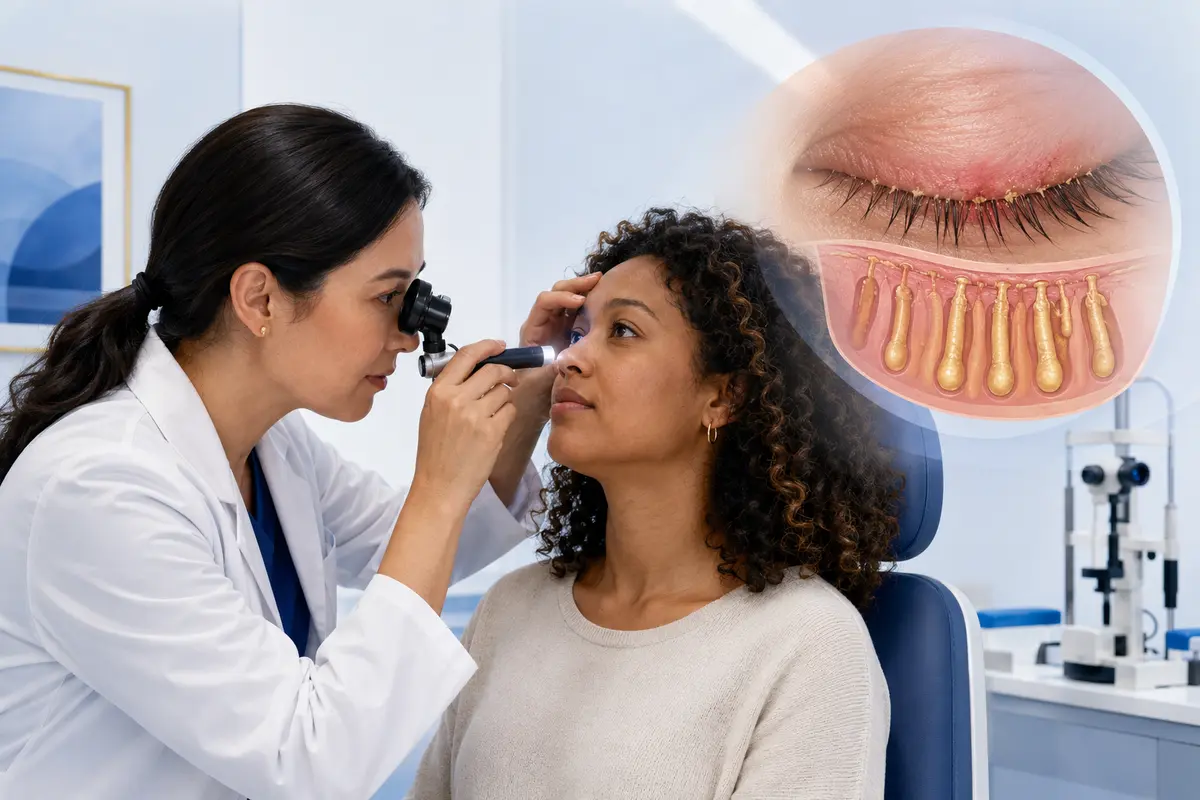
About blepharitis
Blepharitis is inflammation along the eyelid edges, often involving clogged oil glands or skin bacteria.
What can cause it?
Blepharitis is linked to clogged eyelid oil glands, skin bacteria, dandruff, rosacea, allergies, or eyelid mites.
It often recurs and may contribute to dry eye or styes.
What a patient may notice
Symptoms vary from person to person. Possible signs may include:
- Red, swollen, or itchy eyelids
- Crusting around eyelashes
- Burning, gritty, watery, or dry eyes
How clinicians find the cause
An eye clinician examines the eyelid edges, lashes, tear film, cornea, and skin. Culture or other testing is rarely needed unless infection is severe or treatment fails.
Treatment and next steps
- 1
Regular warm compresses and eyelid cleaning are the foundation of treatment.
- 2
Artificial tears, antibiotic treatment, or anti-inflammatory medicine may be prescribed depending on findings.
- 3
Steroid eye medicine should be used only under professional supervision.
Supporting recovery
- Apply a comfortably warm compress, then gently clean the lid margin as directed.
- Pause eye makeup and contact lenses during significant irritation.
- Do not share eye products or towels.
What to expect
Blepharitis is often a long-term or recurring condition, but regular eyelid care usually controls symptoms. Improvement may take several weeks, and maintenance cleaning may be needed even when the eyelids feel better. Associated dry eye, rosacea, or dandruff may also need treatment.
Possible complications
- Dry eye or irritation of the cornea
- Repeated styes or blocked eyelid glands called chalazia
- Eyelid scarring, misdirected eyelashes, or loss of eyelashes in persistent cases
When to Contact a Medical Professional
Arrange an evaluation when symptoms are new, worsening, interfering with normal activities, or not improving as expected.
Eye pain, vision changes, marked light sensitivity, injury, or rapidly increasing swelling needs prompt eye evaluation.Get emergency help for severe trouble breathing, new chest pressure, fainting, seizure, sudden weakness on one side, uncontrolled bleeding, blue or gray lips, or a person who is difficult to wake.
Ways to lower risk
- Continue eyelid hygiene after symptoms improve when advised.
- Manage dandruff, rosacea, and dry eye with the care team.
Trusted health information
This CHS patient-education page uses original wording and links to MedlinePlus for additional information.