
Boils
A boil is a painful skin infection that forms around a hair follicle and fills with pus.
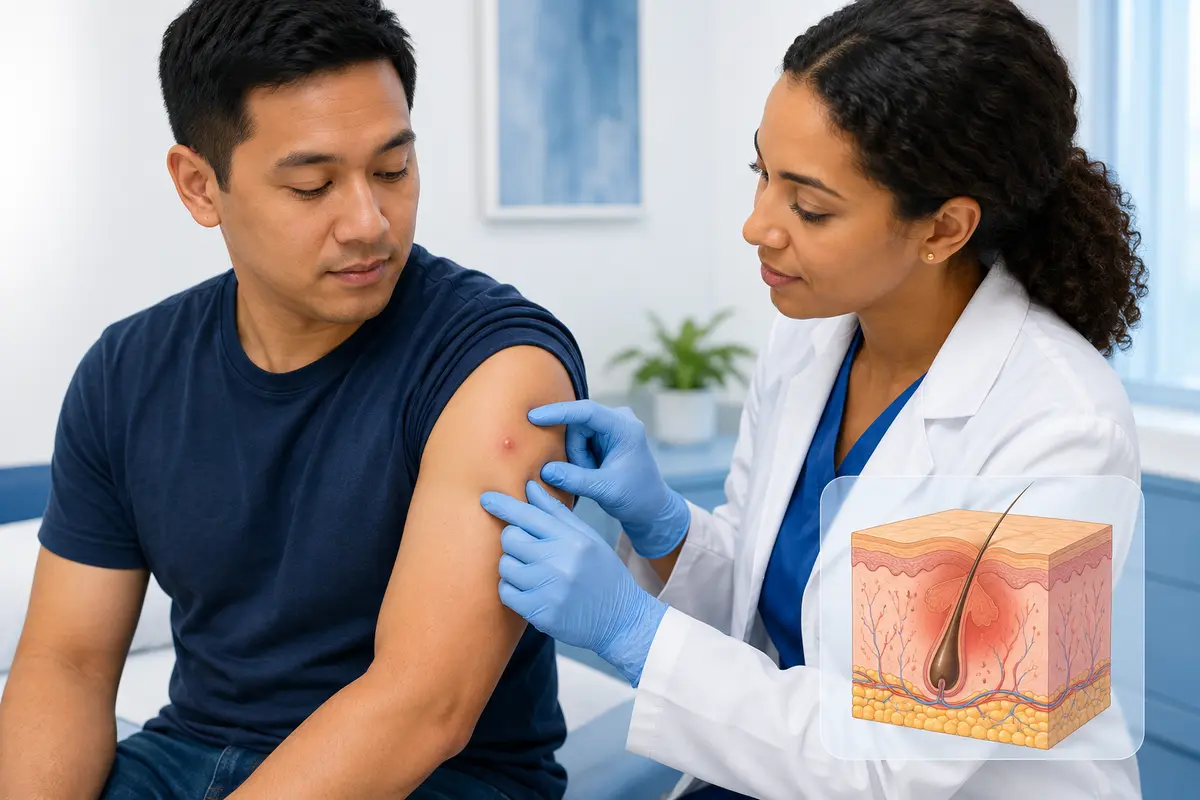
About boils
A boil is a painful skin infection that forms around a hair follicle and fills with pus.
What can cause it?
A boil is a bacterial infection of a hair follicle, commonly involving Staphylococcus bacteria.
Friction, shaving, close contact, diabetes, eczema, and immune problems can increase risk.
What a patient may notice
Symptoms vary from person to person. Possible signs may include:
- Tender red bump
- Increasing swelling or a pus-filled center
- Drainage, nearby redness, or fever
How clinicians find the cause
A clinician examines the depth and surrounding redness. Drainage may be cultured when infection is large, recurrent, severe, or not responding to treatment.
Treatment and next steps
- 1
Larger or fluctuant boils may need professional drainage.
- 2
Antibiotics are added for spreading infection, fever, high-risk locations, or certain medical conditions.
- 3
Do not squeeze, cut, or share needles to drain a boil.
Supporting recovery
- Use clean warm compresses and keep any drainage covered.
- Wash hands before and after dressing changes.
- Wash towels, clothing, and bedding that contact drainage.
What to expect
Many boils heal after they drain and the infection resolves, often within about two weeks. Larger, deep, or recurrent boils may require professional drainage, culture, and additional treatment. Some people continue to develop boils until bacterial spread or an underlying risk factor is addressed.
Possible complications
- A cluster of connected boils called a carbuncle
- Cellulitis, scarring, or spread to other skin areas
- Infection spreading into the bloodstream, bone, heart, or another organ in severe cases
When to Contact a Medical Professional
A same-day medical evaluation is recommended, especially when symptoms are severe, worsening, or accompanied by fever, vomiting, weakness, or significant pain.
Seek urgent care for rapidly spreading redness, facial swelling near the eye, severe pain, confusion, fainting, or fever with worsening illness.Get emergency help for severe trouble breathing, new chest pressure, fainting, seizure, sudden weakness on one side, uncontrolled bleeding, blue or gray lips, or a person who is difficult to wake.
Ways to lower risk
- Do not share razors, towels, or athletic equipment.
- Clean and cover small skin injuries and manage underlying skin disease.
Trusted health information
This CHS patient-education page uses original wording and links to MedlinePlus for additional information.