
Breast Lump
A breast lump may come from a cyst, infection, hormonal change, or another breast condition. Any new or changing lump should be evaluated.
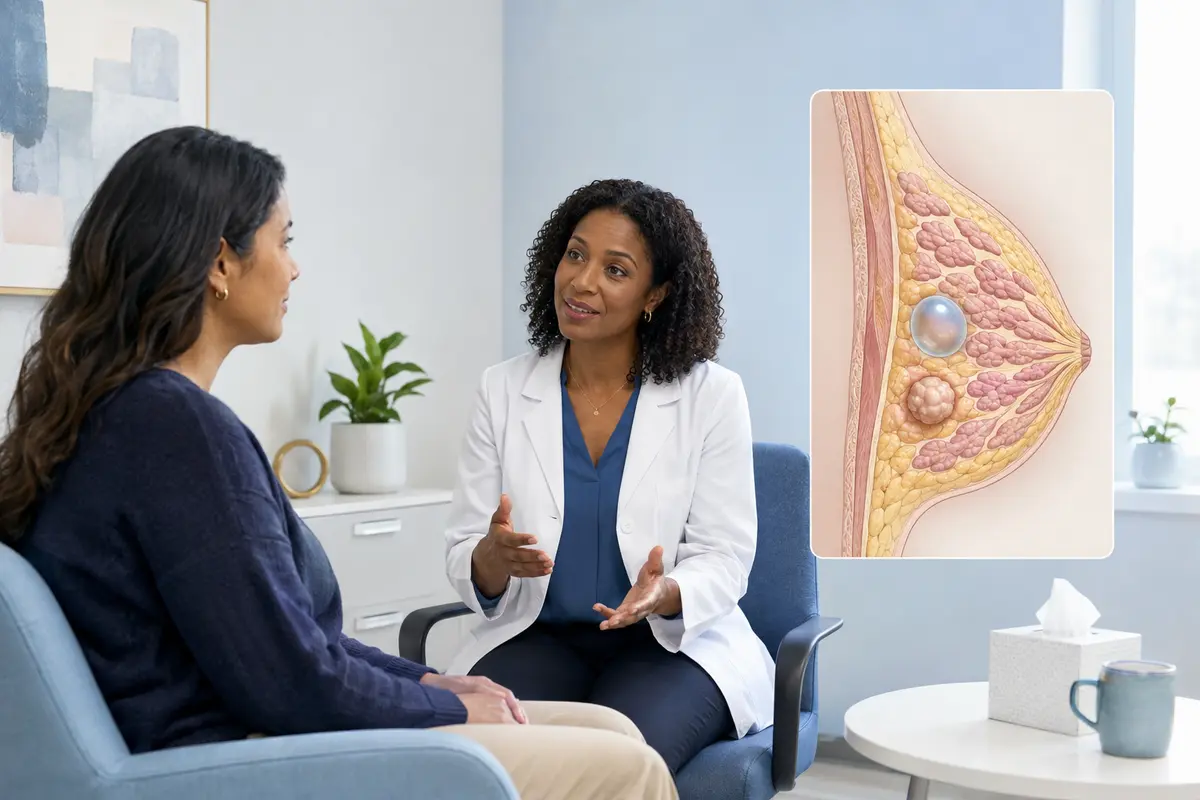
About breast lump
A breast lump may come from a cyst, infection, hormonal change, or another breast condition. Any new or changing lump should be evaluated.
What can cause it?
Breast lumps may be cysts, fibroadenomas, infection, hormonal tissue changes, fat injury, or cancer.
Most lumps are not cancer, but examination and age-appropriate imaging are needed to determine the cause.
What a patient may notice
Symptoms vary from person to person. Possible signs may include:
- New lump or thickened area
- Change in breast shape, skin, or nipple
- Tenderness, redness, warmth, or nipple discharge
How clinicians find the cause
Evaluation includes breast and lymph-node examination and review of pregnancy, menstrual pattern, family history, and prior imaging. Ultrasound, mammography, and sometimes needle biopsy are used based on age and findings.
Treatment and next steps
- 1
Treatment depends on the diagnosis; cysts may be observed or drained, infection may need antibiotics or drainage, and suspicious findings need breast-specialist care.
- 2
Do not rely on pain or mobility of a lump to decide whether it is harmless.
- 3
Continue recommended routine screening.
Supporting recovery
- Note when the lump was first felt and whether it changes with the menstrual cycle.
- Avoid repeatedly squeezing the area.
- Bring prior breast-imaging reports when available.
What to expect
Most breast lumps are not cancerous, but appearance and touch alone cannot reliably determine the cause. Benign cysts and fibroadenomas may be observed, drained, biopsied, or removed depending on symptoms and imaging. Completing every recommended test is the safest way to establish the outlook.
Possible complications
- Pain, enlargement, bleeding, or infection depending on the type of lump
- An abscess requiring drainage when infection is present
- Delayed diagnosis and treatment if a cancerous or suspicious lump is not fully evaluated
When to Contact a Medical Professional
Arrange an evaluation when symptoms are new, worsening, interfering with normal activities, or not improving as expected.
Fever with a red painful breast, rapidly spreading redness, severe illness, or a breast injury with major swelling needs prompt care.Get emergency help for severe trouble breathing, new chest pressure, fainting, seizure, sudden weakness on one side, uncontrolled bleeding, blue or gray lips, or a person who is difficult to wake.
Ways to lower risk
- Many benign and malignant lumps cannot be prevented.
- Know your usual breast appearance and keep screening appointments based on age and risk.
Trusted health information
This CHS patient-education page uses original wording and links to MedlinePlus for additional information.