
Broken Bone
A broken bone, or fracture, may follow an injury or occur when a weakened bone cannot tolerate normal stress.
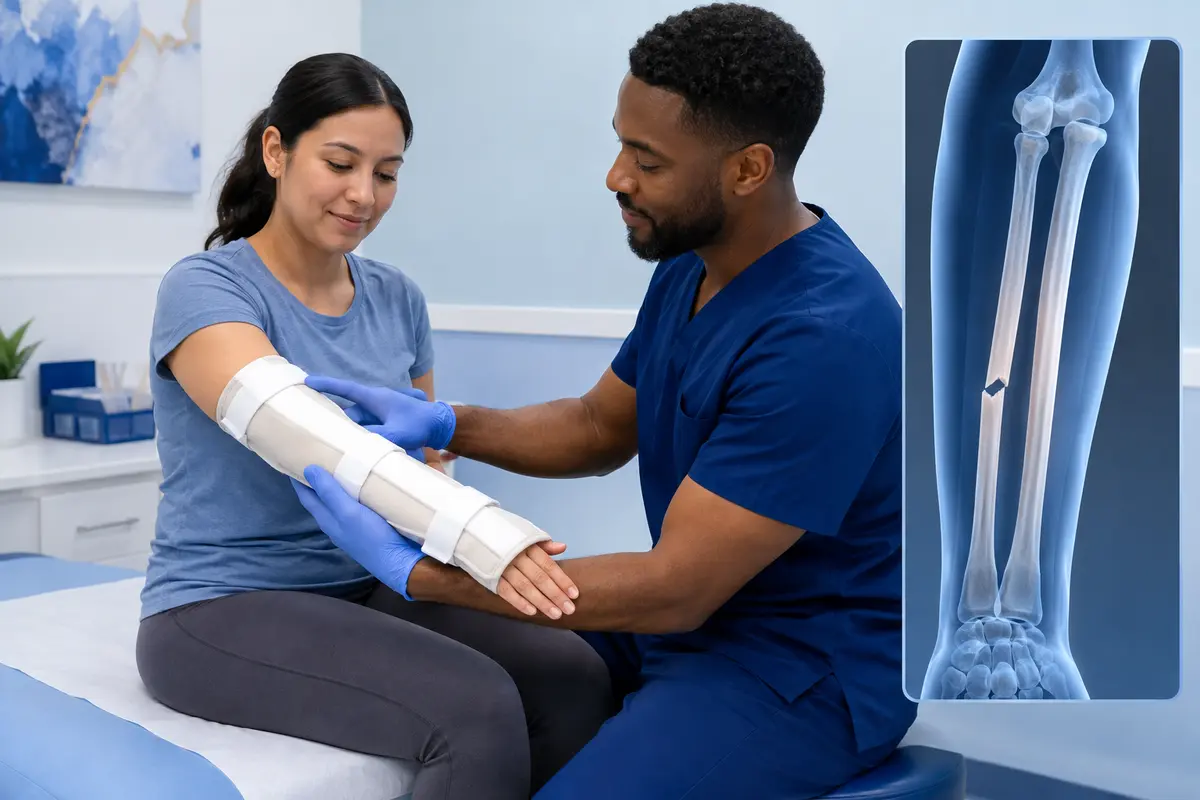
About broken bone
A broken bone, or fracture, may follow an injury or occur when a weakened bone cannot tolerate normal stress.
What can cause it?
Fractures result from falls, direct impact, twisting, repetitive stress, or weakened bone.
Osteoporosis, cancer, infection, and some medicines can allow a fracture after minor force.
What a patient may notice
Symptoms vary from person to person. Possible signs may include:
- Pain, swelling, or bruising after injury
- Deformity or inability to use the area
- Tenderness directly over a bone
How clinicians find the cause
A clinician checks alignment, skin, tenderness, blood flow, sensation, and movement. X-rays diagnose most fractures; CT, MRI, or bone imaging may be needed for complex or stress fractures.
Treatment and next steps
- 1
Treatment restores alignment and protects the bone with a splint, cast, brace, or surgery.
- 2
Open fractures need emergency antibiotics and surgical cleaning.
- 3
Rehabilitation restores movement and strength after the bone is stable.
Supporting recovery
- Keep the injured area still and remove rings or tight items before swelling increases.
- Apply wrapped ice and elevate when appropriate.
- Do not straighten a deformity or push exposed bone back inside.
What to expect
Most fractures heal when the bone is properly aligned, protected, and monitored. Healing commonly takes several weeks and may take longer for severe, open, displaced, or stress fractures and in people who smoke or have conditions that affect bone health. Rehabilitation may continue after the bone has healed to restore motion and strength.
Possible complications
- Delayed healing, failure to heal, or healing in an incorrect position
- Infection, especially when the skin is broken or surgery is required
- Nerve or blood-vessel injury, compartment syndrome, joint stiffness, weakness, or long-term pain
When to Contact a Medical Professional
A same-day medical evaluation is recommended, especially when symptoms are severe, worsening, or accompanied by fever, vomiting, weakness, or significant pain.
Call 911 or seek emergency care for an open fracture, major deformity, uncontrolled bleeding, numbness, or a pale, blue, or cold limb.Get emergency help for severe trouble breathing, new chest pressure, fainting, seizure, sudden weakness on one side, uncontrolled bleeding, blue or gray lips, or a person who is difficult to wake.
Ways to lower risk
- Use fall prevention, protective equipment, safe training, and adequate calcium and vitamin D as medically appropriate.
- Discuss bone-density evaluation after a low-impact fracture.
Trusted health information
This CHS patient-education page uses original wording and links to MedlinePlus for additional information.