
Broken or Knocked out Tooth
A broken or knocked-out permanent tooth is a dental emergency. Rapid action may improve the chance of saving the tooth.
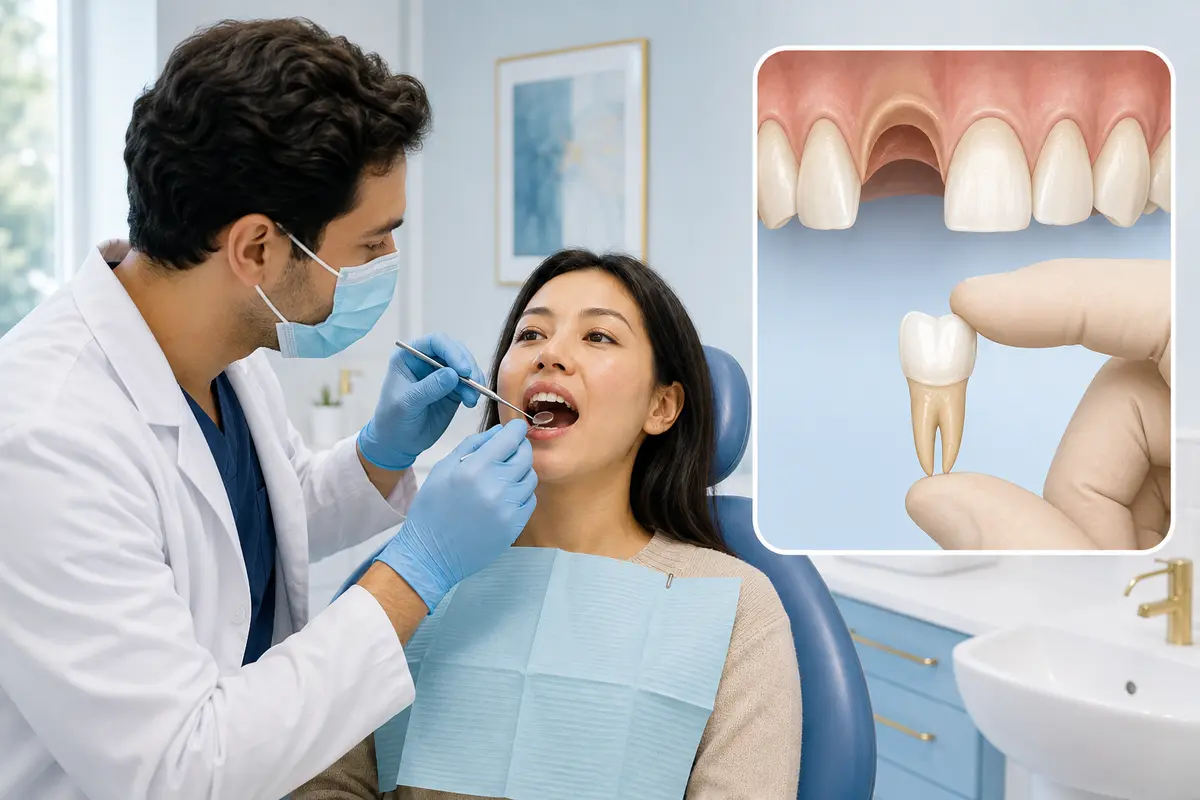
About broken or knocked out tooth
A broken or knocked-out permanent tooth is a dental emergency. Rapid action may improve the chance of saving the tooth.
What can cause it?
Teeth may fracture or be knocked out by falls, sports, collisions, biting hard objects, or weakened enamel.
A permanent tooth has the best chance of survival when reimplanted quickly by a dental professional.
What a patient may notice
Symptoms vary from person to person. Possible signs may include:
- Missing, loose, cracked, or chipped tooth
- Bleeding or pain in the mouth
- Sensitivity or exposed inner tooth
How clinicians find the cause
A dentist examines tooth structure, bite, gums, jaw, and nearby teeth. Dental x-rays identify root fracture, displacement, or jaw injury.
Treatment and next steps
- 1
For a knocked-out permanent tooth, handle only the crown, gently rinse if dirty, and place it back in the socket if this can be done safely—or keep it moist in milk or an appropriate tooth-preservation solution while seeking immediate dental care.
- 2
Do not reinsert a knocked-out baby tooth.
- 3
Broken teeth may need bonding, a crown, root-canal treatment, splinting, or extraction.
Supporting recovery
- Control bleeding with gentle pressure and use a cold pack outside the face.
- Save all tooth fragments and seek emergency dental care immediately.
- Avoid chewing on the injured side.
What to expect
A chipped or fractured tooth can often be restored. A knocked-out permanent tooth has the best chance of survival when it is kept moist and replanted by a dental professional as quickly as possible. Even after successful replantation, long-term dental monitoring and root-canal treatment may be needed.
Possible complications
- Death or infection of the tooth's inner pulp, sometimes requiring root-canal treatment
- Root resorption, discoloration, looseness, or eventual loss of a replanted tooth
- Damage to nearby teeth, gums, lips, jaw, or the way the teeth meet
When to Contact a Medical Professional
A same-day medical evaluation is recommended, especially when symptoms are severe, worsening, or accompanied by fever, vomiting, weakness, or significant pain.
Call 911 for severe facial trauma, trouble breathing, uncontrolled bleeding, loss of consciousness, or possible neck injury.Get emergency help for severe trouble breathing, new chest pressure, fainting, seizure, sudden weakness on one side, uncontrolled bleeding, blue or gray lips, or a person who is difficult to wake.
Ways to lower risk
- Use a fitted mouthguard for contact sports and helmets for wheeled activities.
- Do not use teeth to open packages or bite very hard objects.
Trusted health information
This CHS patient-education page uses original wording and links to MedlinePlus for additional information.