
Bronchiolitis
Bronchiolitis is a viral infection of the smallest airways, most common in infants and young children.
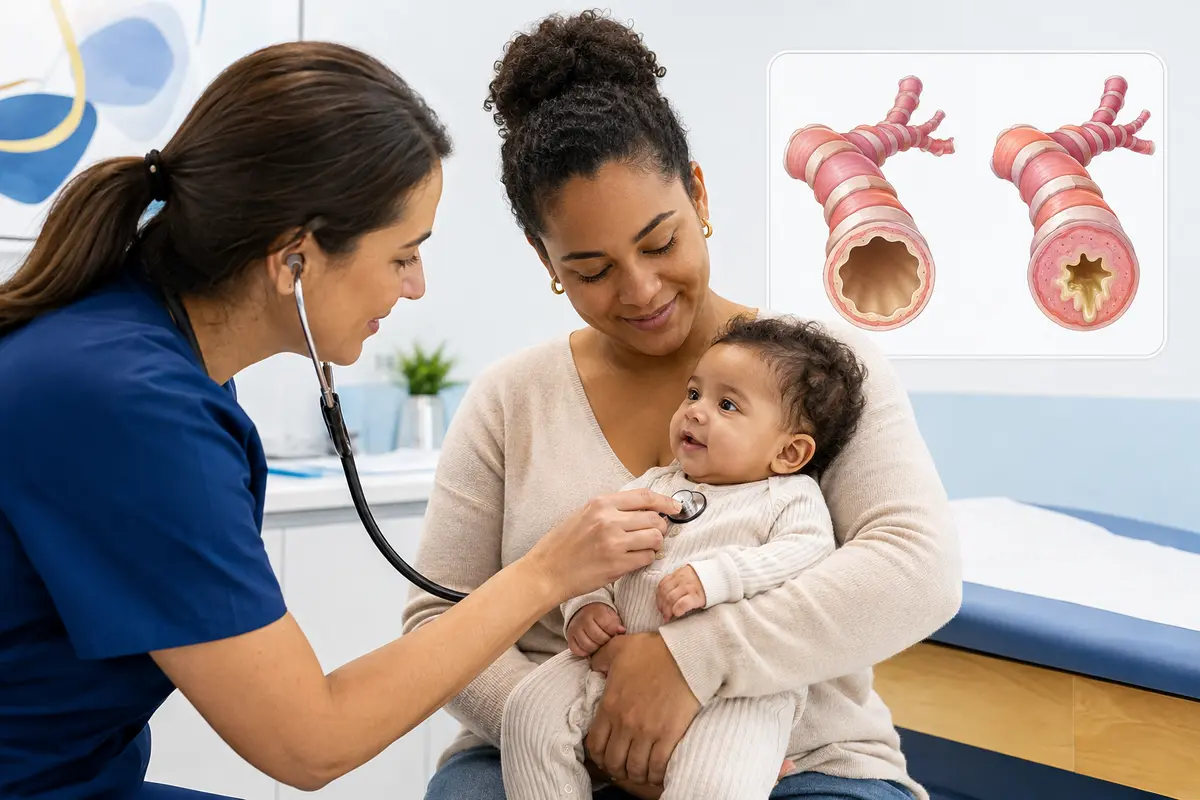
About bronchiolitis
Bronchiolitis is a viral infection of the smallest airways, most common in infants and young children.
What can cause it?
Bronchiolitis is usually caused by RSV or another respiratory virus in children younger than two.
Swelling and mucus narrow the smallest airways, making breathing and feeding difficult.
What a patient may notice
Symptoms vary from person to person. Possible signs may include:
- Runny nose followed by cough
- Wheezing or fast breathing
- Difficulty feeding, fewer wet diapers, or irritability
How clinicians find the cause
Diagnosis is usually based on age, symptoms, breathing effort, hydration, lung examination, and oxygen level. Viral testing or chest x-ray is reserved for selected cases.
Treatment and next steps
- 1
Most treatment is supportive: nasal suction, fluids, oxygen when needed, and close monitoring.
- 2
Antibiotics do not treat viral bronchiolitis, and routine cough medicines are not recommended for infants.
- 3
Children with low oxygen, dehydration, pauses in breathing, or severe effort may need hospital care.
Supporting recovery
- Use saline drops and gentle suction before feeds and sleep if advised.
- Offer smaller, more frequent feeds and monitor wet diapers.
- Keep the child away from smoke and do not use nonprescription cough or cold medicine unless the child's clinician specifically directs it.
What to expect
Most children improve with supportive care as the viral infection clears. Breathing and feeding may be most difficult during the first several days, while cough or wheezing can last longer. Young infants, premature babies, and children with heart, lung, or immune conditions have a higher risk of severe illness.
Possible complications
- Dehydration from poor feeding and increased breathing effort
- Low oxygen, pauses in breathing, or respiratory failure requiring hospital support
- A longer recovery or recurrent wheezing after a severe episode
When to Contact a Medical Professional
A same-day medical evaluation is recommended, especially when symptoms are severe, worsening, or accompanied by fever, vomiting, weakness, or significant pain.
Call 911 for pauses in breathing, blue or gray lips, severe chest pulling, grunting, inability to drink, unusual sleepiness, or difficulty waking.Get emergency help for severe trouble breathing, new chest pressure, fainting, seizure, sudden weakness on one side, uncontrolled bleeding, blue or gray lips, or a person who is difficult to wake.
Ways to lower risk
- Wash hands, clean shared surfaces, and avoid close contact with sick people.
- Ask the child's clinician about current RSV preventive options for eligible infants and keep vaccinations current.
Trusted health information
This CHS patient-education page uses original wording and links to MedlinePlus for additional information.