
Bunions
A bunion is a bony bump at the base of the big toe caused by changes in joint alignment.
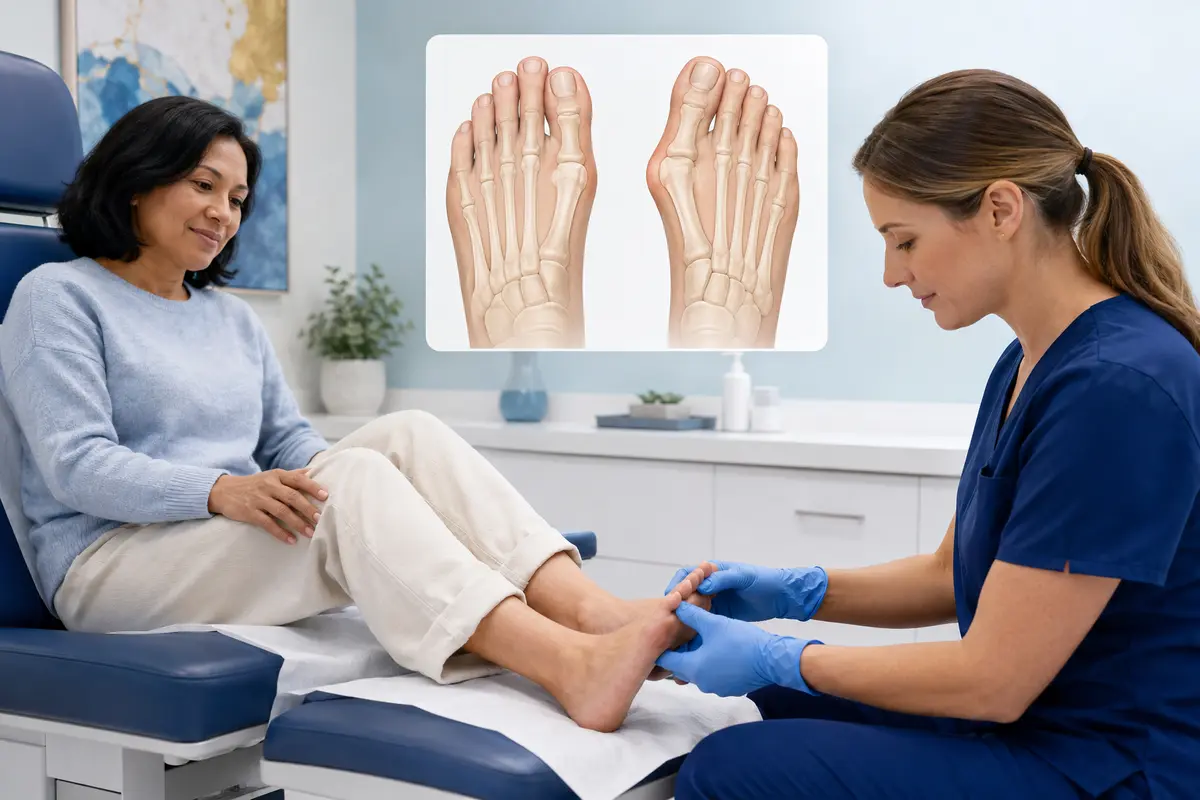
About bunions
A bunion is a bony bump at the base of the big toe caused by changes in joint alignment.
What can cause it?
A bunion develops when the big-toe joint shifts out of alignment.
Foot shape, inherited structure, arthritis, and shoes that crowd the toes can contribute.
What a patient may notice
Symptoms vary from person to person. Possible signs may include:
- Visible bump at the big-toe joint
- Redness, soreness, or swelling
- Limited toe movement or pain in shoes
How clinicians find the cause
Examination assesses alignment, skin irritation, joint motion, and walking. Weight-bearing x-rays show the degree of deformity and arthritis when treatment planning requires it.
Treatment and next steps
- 1
Wide toe-box footwear, protective pads, inserts, and clinician-guided pain care may reduce symptoms but do not permanently realign the bone.
- 2
Surgery may be considered when pain and activity limits remain significant despite nonoperative care.
- 3
The procedure is selected according to the specific deformity.
Supporting recovery
- Choose shoes with a wide toe box and low stable heel.
- Use padding without cutting off circulation.
- Apply wrapped ice after painful activity.
What to expect
Wide, properly fitted shoes and pressure relief can keep many bunions comfortable and may slow worsening, but they do not reverse the bone alignment. Surgery relieves pain for many people whose symptoms remain limiting, although recovery takes time and the deformity can sometimes recur.
Possible complications
- Persistent pain, stiffness, and difficulty walking or finding comfortable shoes
- Corns, calluses, skin irritation, bursitis, or arthritis around the big-toe joint
- Recurrence, infection, nerve irritation, or continued stiffness after surgery
When to Contact a Medical Professional
A healthcare professional can confirm the cause, discuss appropriate testing, and create a treatment or prevention plan for you.
A red, hot, rapidly swollen joint, fever, open wound, numbness, or a blue or cold toe needs prompt evaluation.Get emergency help for severe trouble breathing, new chest pressure, fainting, seizure, sudden weakness on one side, uncontrolled bleeding, blue or gray lips, or a person who is difficult to wake.
Ways to lower risk
- Supportive properly fitted shoes may slow symptoms and prevent pressure injury.
- Foot exercises may help motion but cannot reverse a structural bunion.
Trusted health information
This CHS patient-education page uses original wording and links to MedlinePlus for additional information.