
Burns
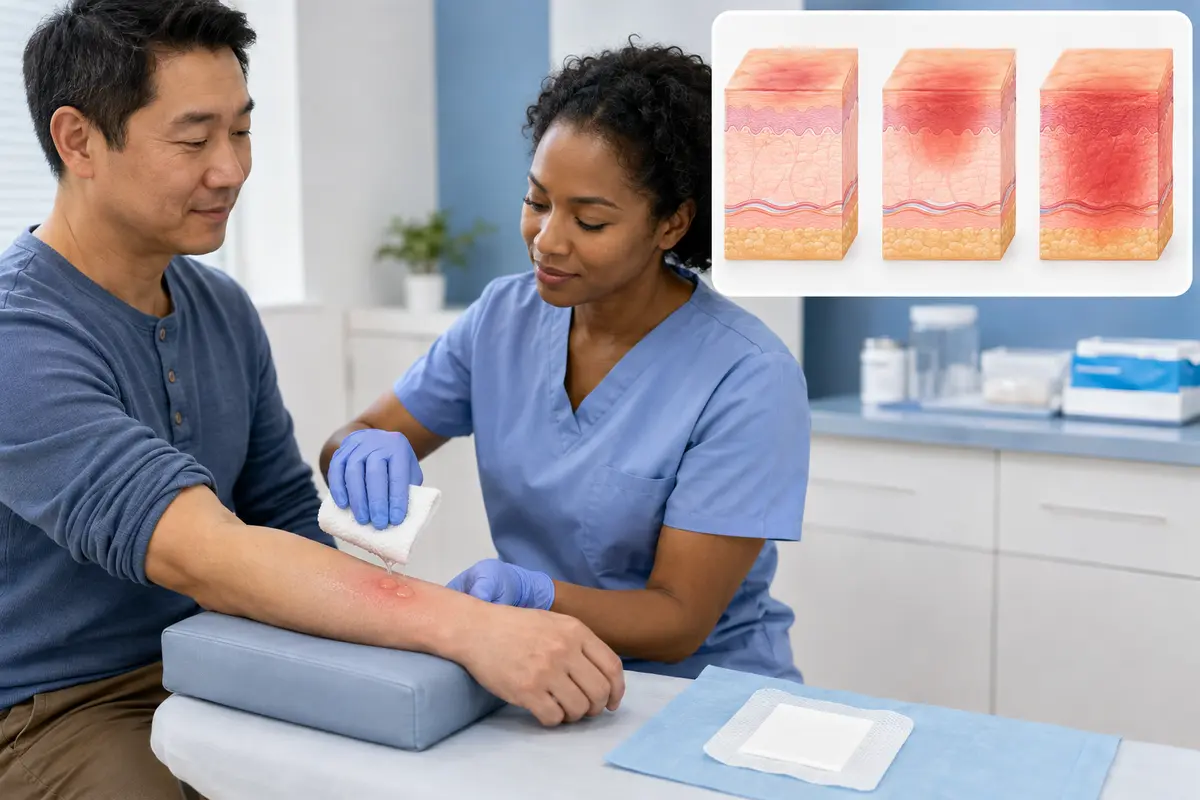
Burns damage skin and sometimes deeper tissue through heat, chemicals, electricity, radiation, or friction.
About burns
Burns damage skin and sometimes deeper tissue through heat, chemicals, electricity, radiation, or friction.
What can cause it?
Burns may be caused by heat, steam, hot liquids, chemicals, electricity, radiation, or friction.
Severity depends on depth, size, location, age, health conditions, and inhalation injury—not pain alone.
What a patient may notice
Symptoms vary from person to person. Possible signs may include:
- Redness, pain, swelling, or blistering
- White, brown, charred, or numb skin in deeper burns
- Cough, soot, or breathing symptoms after smoke exposure
How clinicians find the cause
A clinician estimates burn depth and body-surface area and checks airway, circulation, nerve function, and associated trauma. Electrical and chemical burns may require blood tests, heart monitoring, or specialist evaluation.
Treatment and next steps
- 1
Cool a recent thermal burn under cool running water; do not use ice.
- 2
Cover loosely with a clean nonstick dressing and seek care based on size, depth, location, and symptoms.
- 3
Deep, large, facial, hand, genital, major-joint, electrical, chemical, or inhalation burns may need emergency or burn-center treatment.
Supporting recovery
- Remove jewelry and tight items before swelling develops, but do not remove material stuck to the skin.
- Do not pop blisters or apply butter, toothpaste, or unknown creams.
- For dry chemicals, brush off visible powder before prolonged water irrigation; follow poison-control or emergency guidance.
What to expect
Small superficial burns often heal with little or no scarring. Deeper, larger, electrical, chemical, or inhalation burns may require hospitalization, surgery, skin grafting, and rehabilitation. Outcome depends on burn depth, body area involved, location, age, other injuries, and how quickly appropriate care begins.
Possible complications
- Wound infection, bloodstream infection, fluid loss, shock, or organ problems after a major burn
- Airway swelling or lasting lung injury after smoke or hot-fume exposure
- Scarring, color changes, contractures, reduced joint movement, or altered sensation
When to Contact a Medical Professional
A same-day medical evaluation is recommended, especially when symptoms are severe, worsening, or accompanied by fever, vomiting, weakness, or significant pain.
Call 911 for breathing difficulty, electrical burns, major chemical burns, burns to the face or airway, deep or large burns, or burns from an explosion.Get emergency help for severe trouble breathing, new chest pressure, fainting, seizure, sudden weakness on one side, uncontrolled bleeding, blue or gray lips, or a person who is difficult to wake.
Ways to lower risk
- Set water heaters safely, supervise cooking and bathing, and keep hot liquids away from children.
- Use smoke alarms, electrical safety, sun protection, and workplace protective equipment.
Trusted health information
This CHS patient-education page uses original wording and links to MedlinePlus for additional information.