
Bursitis
Bursitis is inflammation of a small fluid-filled sac that cushions a joint, often from repetitive pressure or overuse.
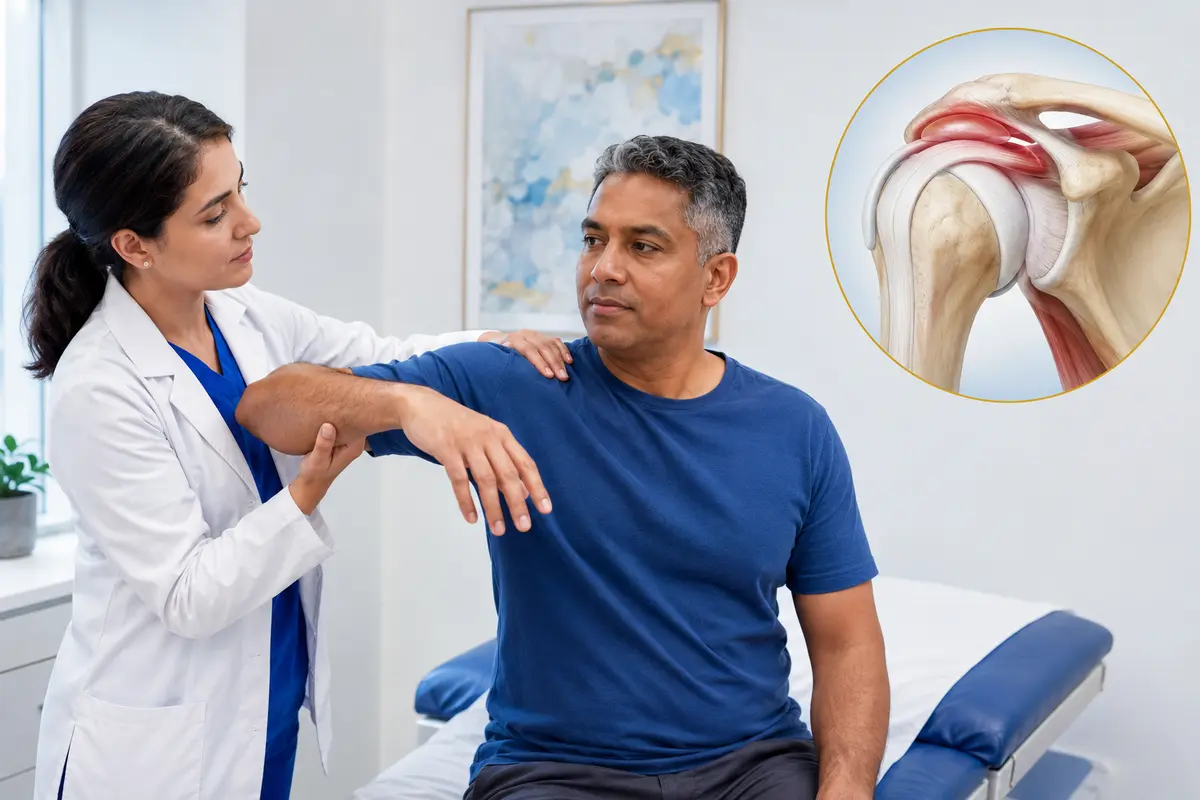
About bursitis
Bursitis is inflammation of a small fluid-filled sac that cushions a joint, often from repetitive pressure or overuse.
What can cause it?
Bursitis occurs when a cushioning bursa becomes inflamed from repetitive pressure, overuse, injury, gout, arthritis, or infection.
Common sites include the shoulder, elbow, hip, and knee.
What a patient may notice
Symptoms vary from person to person. Possible signs may include:
- Pain near a shoulder, elbow, hip, or knee
- Tenderness with movement or pressure
- Swelling, warmth, or reduced motion
How clinicians find the cause
A clinician examines the painful area and movement. Ultrasound, x-ray, or MRI may be used. A red hot swollen bursa may be aspirated to check for bacteria or crystals.
Treatment and next steps
- 1
Noninfectious bursitis is treated with activity modification, protection from pressure, rehabilitation, and clinician-guided pain care.
- 2
Selected cases may receive aspiration or an injection.
- 3
Infectious bursitis requires antibiotics and sometimes repeated drainage or surgery.
Supporting recovery
- Rest the aggravating activity and protect the area from direct pressure.
- Use wrapped ice for short periods after activity.
- Resume movement gradually to avoid stiffness.
What to expect
Most noninfectious bursitis improves when pressure and repetitive activity are reduced and motion is gradually restored. Recovery may take days to weeks, and symptoms can return if the cause continues. Infected bursitis needs prompt treatment and closer follow-up.
Possible complications
- Chronic or recurrent pain, swelling, stiffness, and reduced activity
- Infection spreading into nearby tissue, a joint, bone, or the bloodstream
- Skin drainage or the need for repeated aspiration, antibiotics, or surgery in infected cases
When to Contact a Medical Professional
Arrange an evaluation when symptoms are new, worsening, interfering with normal activities, or not improving as expected.
Fever with a red hot joint, severe injury, inability to move the joint, or rapidly spreading redness needs urgent evaluation.Get emergency help for severe trouble breathing, new chest pressure, fainting, seizure, sudden weakness on one side, uncontrolled bleeding, blue or gray lips, or a person who is difficult to wake.
Ways to lower risk
- Use padding, good technique, breaks, and gradual training increases.
- Strengthen and maintain flexibility around the joint.
Trusted health information
This CHS patient-education page uses original wording and links to MedlinePlus for additional information.