
Candida Infection of the Skin
A skin Candida infection is caused by yeast growing in warm, moist areas such as skin folds.
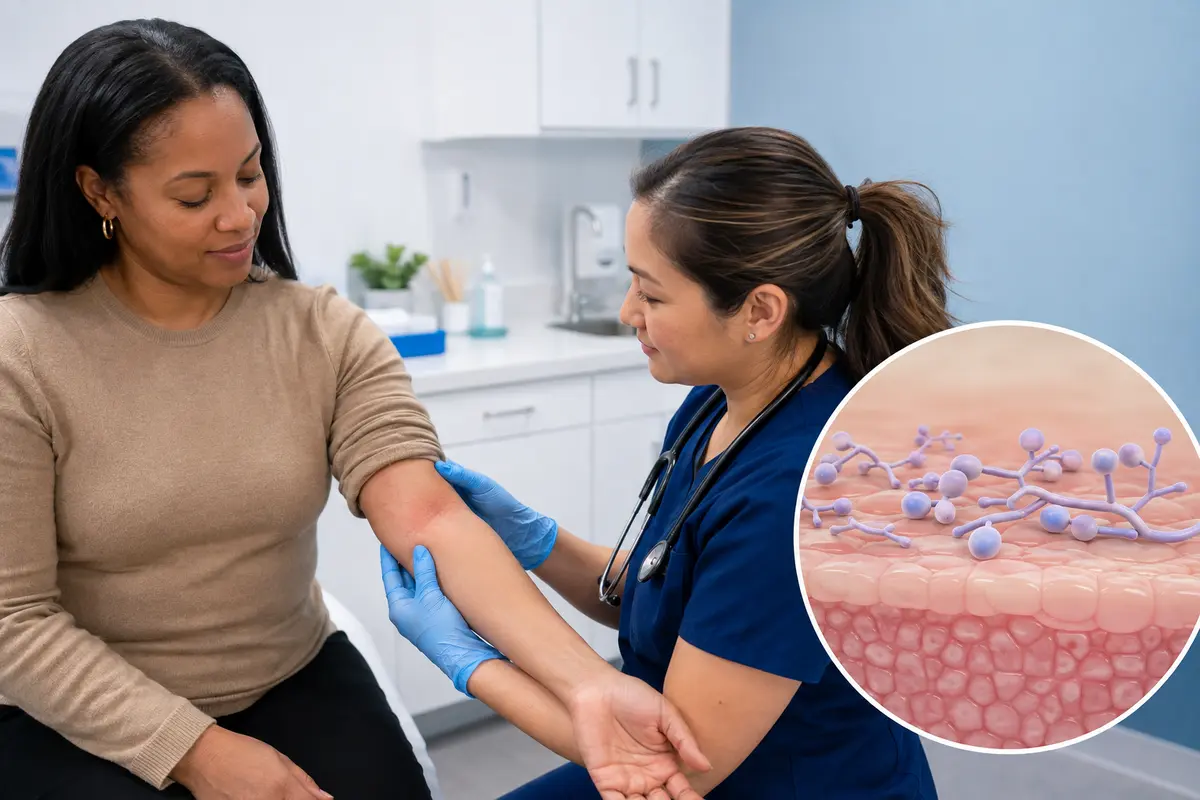
About candida infection of the skin
A skin Candida infection is caused by yeast growing in warm, moist areas such as skin folds.
What can cause it?
Candida yeast can overgrow in warm moist skin folds, especially with friction, sweating, recent antibiotics, diabetes, or immune problems.
A bacterial rash, eczema, psoriasis, and other fungal infections can look similar.
What a patient may notice
Symptoms vary from person to person. Possible signs may include:
- Bright red itchy rash
- Small nearby red bumps
- Soreness, cracking, or moist skin
How clinicians find the cause
Diagnosis is often based on appearance and location. A skin scraping, swab, or culture may be used when the rash is recurrent, severe, or not responding.
Treatment and next steps
- 1
Treatment includes keeping the area dry and using an appropriate topical antifungal; extensive or resistant infection may require prescription oral treatment.
- 2
Steroid cream alone can worsen or mask yeast infection.
Supporting recovery
- Wash gently, dry skin folds completely, and change damp clothing.
- Use loose breathable fabric and do not share towels.
What to expect
Skin candidiasis often clears with antifungal treatment and correction of moisture, friction, or high blood sugar. Repeat infections are common when the underlying conditions remain. Extensive infection needs closer medical follow-up, especially in people with weakened immunity.
Possible complications
- Recurring rash, cracking, discomfort, and skin breakdown
- Nail or nail-fold infection and secondary bacterial infection of damaged skin
- Rare widespread Candida infection in a person with a severely weakened immune system
When to Contact a Medical Professional
Arrange an evaluation when symptoms are new, worsening, interfering with normal activities, or not improving as expected.
Fever, rapidly spreading redness, severe pain, pus, or infection in a person with a weakened immune system needs prompt care.Get emergency help for severe trouble breathing, new chest pressure, fainting, seizure, sudden weakness on one side, uncontrolled bleeding, blue or gray lips, or a person who is difficult to wake.
Ways to lower risk
- Manage diabetes, reduce prolonged moisture, and address friction.
- Use antibiotics only when prescribed.
Trusted health information
This CHS patient-education page uses original wording and links to MedlinePlus for additional information.