
Cat-Scratch Disease
Cat-scratch disease is a bacterial infection that may follow a cat scratch or bite, especially from a kitten.
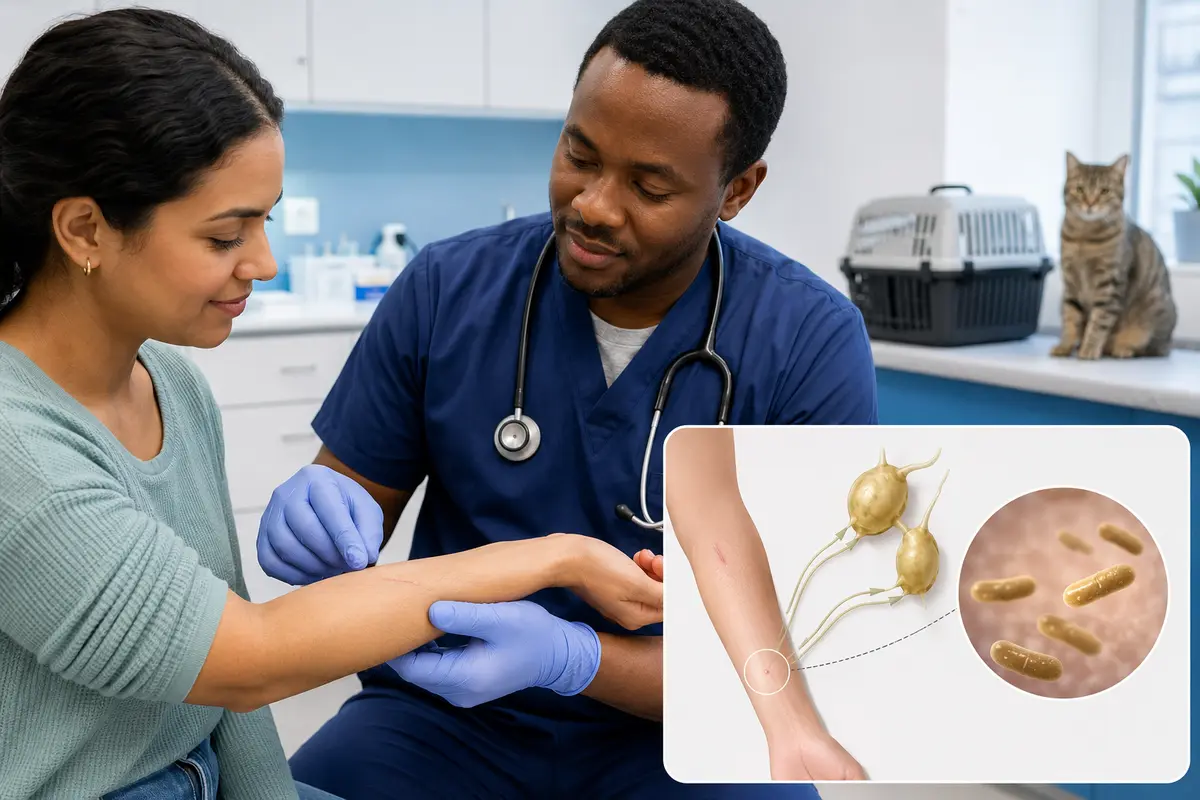
About cat-scratch disease
Cat-scratch disease is a bacterial infection that may follow a cat scratch or bite, especially from a kitten.
What can cause it?
Cat-scratch disease is caused by Bartonella bacteria, usually after a scratch, bite, or lick from an infected cat or kitten.
People with weakened immune systems have greater risk of organ, eye, or neurologic complications.
What a patient may notice
Symptoms vary from person to person. Possible signs may include:
- Small bump or blister at the injury site
- Swollen tender lymph nodes
- Fever, fatigue, or headache
How clinicians find the cause
Diagnosis uses exposure history, the skin lesion, swollen lymph nodes, and sometimes blood testing or imaging. Persistent or unusual lymph-node swelling may require additional testing.
Treatment and next steps
- 1
Many uncomplicated cases improve with supportive care.
- 2
Antibiotics may be prescribed for significant, prolonged, eye, neurologic, or immune-compromised disease.
- 3
Painful large lymph nodes occasionally require specialist drainage.
Supporting recovery
- Wash scratches and bites promptly with soap and water.
- Do not allow cats to lick open wounds and avoid rough play with kittens.
What to expect
People with a healthy immune system usually recover fully, although swollen lymph nodes can remain enlarged or tender for weeks to months. People with weakened immunity are more likely to need antibiotics and monitoring for infection outside the lymph nodes.
Possible complications
- A lymph node that fills with pus, drains through the skin, or remains enlarged
- Eye and optic-nerve inflammation with vision symptoms
- Rare brain, bone, liver, spleen, heart, or widespread infection, especially with weakened immunity
When to Contact a Medical Professional
Arrange an evaluation when symptoms are new, worsening, interfering with normal activities, or not improving as expected.
Severe headache, confusion, vision changes, seizure, trouble breathing, or rapidly worsening illness needs emergency care.Get emergency help for severe trouble breathing, new chest pressure, fainting, seizure, sudden weakness on one side, uncontrolled bleeding, blue or gray lips, or a person who is difficult to wake.
Ways to lower risk
- Use flea control for pets and wash hands after handling cats.
- People with weakened immunity should avoid stray cats and young kittens when possible.
Trusted health information
This CHS patient-education page uses original wording and links to MedlinePlus for additional information.