
Cataract
A cataract is clouding of the eye's natural lens that causes gradually worsening vision.
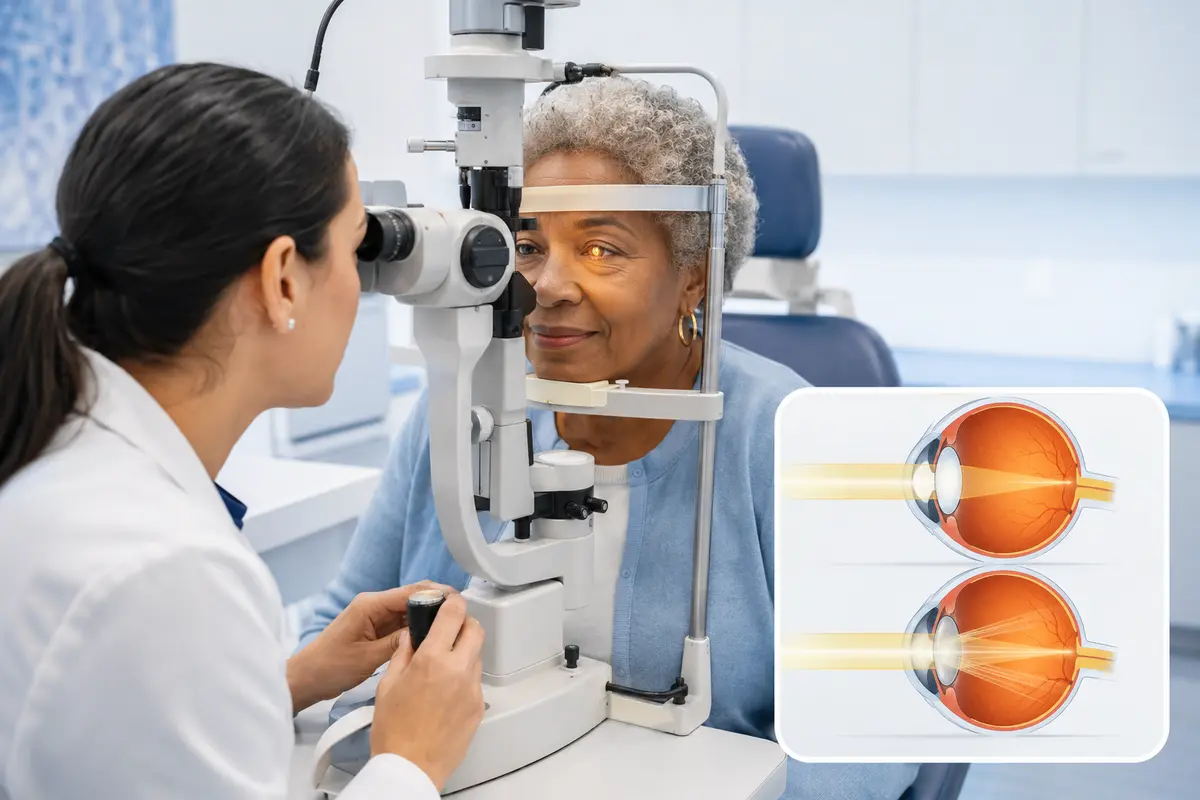
About cataract
A cataract is clouding of the eye's natural lens that causes gradually worsening vision.
What can cause it?
A cataract forms when proteins in the eye's lens change and make it cloudy.
Aging is most common; diabetes, smoking, steroid exposure, eye injury, and ultraviolet light can contribute.
What a patient may notice
Symptoms vary from person to person. Possible signs may include:
- Blurred, cloudy, or dim vision
- Glare or halos around lights
- Faded colors or frequent prescription changes
How clinicians find the cause
An eye professional checks visual acuity, glare, lens clarity, eye pressure, and the retina after dilation. The examination also looks for other causes of vision loss.
Treatment and next steps
- 1
Updated glasses, brighter lighting, and glare reduction may help early symptoms.
- 2
Cataract surgery replaces the cloudy lens when vision interferes with daily life.
- 3
The timing is based on function, not cataract appearance alone.
Supporting recovery
- Use adequate lighting and reduce nighttime driving if glare limits vision.
- Manage diabetes and keep regular eye appointments.
What to expect
Cataracts usually progress slowly. Updated glasses and lighting may help for a time, but surgery is the only way to remove the cloudy lens. Cataract surgery improves useful vision for most people, although the final result also depends on the health of the retina, optic nerve, and other parts of the eye.
Possible complications
- Progressive vision loss that increases the risk of falls, driving difficulty, and loss of independence
- Severe visual impairment when an advanced cataract is not treated
- Uncommon surgical complications such as infection, inflammation, retinal detachment, pressure problems, or clouding behind the replacement lens
When to Contact a Medical Professional
A healthcare professional can confirm the cause, discuss appropriate testing, and create a treatment or prevention plan for you.
Sudden vision loss, severe eye pain, flashes with many new floaters, or an eye injury needs emergency eye evaluation.Get emergency help for severe trouble breathing, new chest pressure, fainting, seizure, sudden weakness on one side, uncontrolled bleeding, blue or gray lips, or a person who is difficult to wake.
Ways to lower risk
- Wear UV-blocking sunglasses, avoid smoking, and protect eyes from injury.
- Control diabetes and use steroid medicine only as directed.
Trusted health information
This CHS patient-education page uses original wording and links to MedlinePlus for additional information.