
Cervicitis
Cervicitis is inflammation of the cervix and may be caused by infection, irritation, or other conditions.
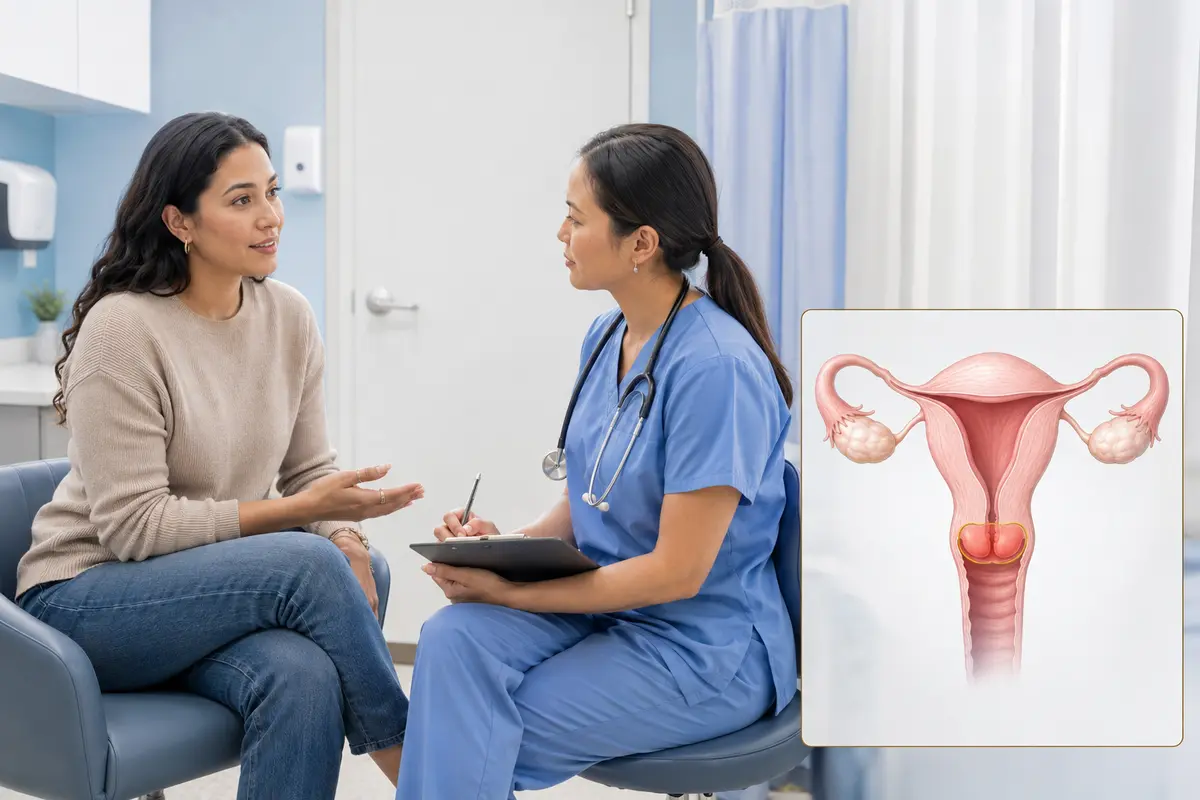
About cervicitis
Cervicitis is inflammation of the cervix and may be caused by infection, irritation, or other conditions.
What can cause it?
Cervicitis may be caused by chlamydia, gonorrhea, trichomonas, herpes, irritation, or disruption of vaginal bacteria.
Untreated infection can spread upward and lead to pelvic inflammatory disease.
What a patient may notice
Symptoms vary from person to person. Possible signs may include:
- Unusual vaginal discharge
- Bleeding between periods or after sex
- Pelvic pain or pain with sex or urination
How clinicians find the cause
A pelvic examination and vaginal or cervical swabs check for inflammation and STIs. Pregnancy testing and evaluation for pelvic inflammatory disease may be needed.
Treatment and next steps
- 1
Treatment targets the identified or most likely infection and may begin before final results when risk is high.
- 2
Recent partners may need testing and treatment.
- 3
Avoid sex until treatment is completed and the clinician's waiting period has passed.
Supporting recovery
- Take prescribed medicine exactly as directed and avoid douching.
- Use condoms and notify partners according to clinical guidance.
What to expect
Cervicitis usually heals when the cause is identified and treated and any exposed partners receive appropriate care. Symptoms can persist or return when infection, irritation, or reinfection continues. Some people have no symptoms, so completing test results and recommended retesting is important.
Possible complications
- Pelvic inflammatory disease when infection spreads into the uterus or fallopian tubes
- Chronic pelvic pain, infertility, or increased risk of ectopic pregnancy after upper reproductive-tract infection
- Ongoing pain with sex, transmission to partners, or reinfection when treatment and partner care are incomplete
When to Contact a Medical Professional
Arrange an evaluation when symptoms are new, worsening, interfering with normal activities, or not improving as expected.
Fever, severe pelvic pain, vomiting, fainting, heavy bleeding, or pregnancy with pain or bleeding needs urgent evaluation.Get emergency help for severe trouble breathing, new chest pressure, fainting, seizure, sudden weakness on one side, uncontrolled bleeding, blue or gray lips, or a person who is difficult to wake.
Ways to lower risk
- Consistent condom use and recommended STI screening reduce risk.
- Do not use fragranced vaginal products or douches.
Trusted health information
This CHS patient-education page uses original wording and links to MedlinePlus for additional information.