
Chafing
Chafing is skin irritation caused by repeated friction, often worsened by moisture and heat.
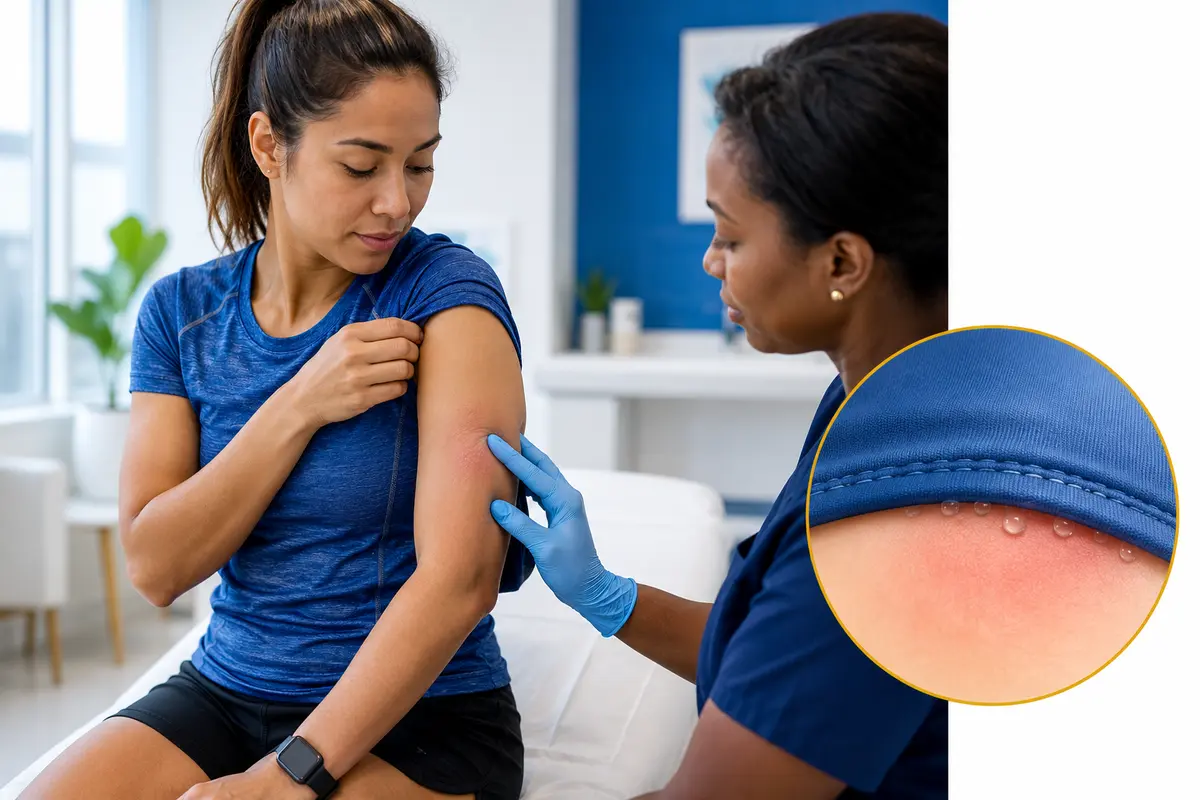
About chafing
Chafing is skin irritation caused by repeated friction, often worsened by moisture and heat.
What can cause it?
Chafing results from repeated skin-to-skin or fabric friction, often combined with sweat, heat, or prolonged activity.
Infection, eczema, yeast, and other rashes may resemble simple chafing.
What a patient may notice
Symptoms vary from person to person. Possible signs may include:
- Red, burning, or tender skin
- Raw patches or small cracks
- Symptoms in thighs, underarms, skin folds, or under clothing
How clinicians find the cause
Mild chafing is usually recognized by its location and relation to friction. A clinician should assess deep breakdown, recurrent rash, drainage, fever, or uncertain diagnosis.
Treatment and next steps
- 1
Remove friction and moisture, gently clean the area, and protect it with a bland barrier product.
- 2
Open or infected skin may need a dressing or prescription treatment.
- 3
Avoid fragranced or stinging products on raw skin.
Supporting recovery
- Keep the area cool and dry and wear smooth moisture-wicking clothing.
- Pause the triggering activity until skin heals.
What to expect
Mild chafing usually improves within several days once rubbing and moisture stop and the skin is protected. Deeper irritation takes longer to heal. Repeated episodes suggest that clothing, activity technique, sweating, or another skin condition needs to be addressed.
Possible complications
- Cracked, blistered, or bleeding skin that becomes more painful with continued friction
- Secondary bacterial or yeast infection in damaged moist skin
- Persistent darkening, thickening, or scarring after repeated or severe irritation
When to Contact a Medical Professional
Mild symptoms may sometimes be managed with general supportive care, but a clinician should evaluate symptoms that persist, spread, become painful, or worsen.
Seek care for spreading redness, pus, fever, severe pain, deep skin breakdown, or symptoms in a person with diabetes or poor circulation.Get emergency help for severe trouble breathing, new chest pressure, fainting, seizure, sudden weakness on one side, uncontrolled bleeding, blue or gray lips, or a person who is difficult to wake.
Ways to lower risk
- Use properly fitting clothing, anti-friction barrier, and prompt clothing changes after sweating.
- Address repeated moisture in skin folds.
Trusted health information
This CHS patient-education page uses original wording and links to MedlinePlus for additional information.