
Chalazion
A chalazion is a usually painless eyelid lump caused by a blocked oil gland.
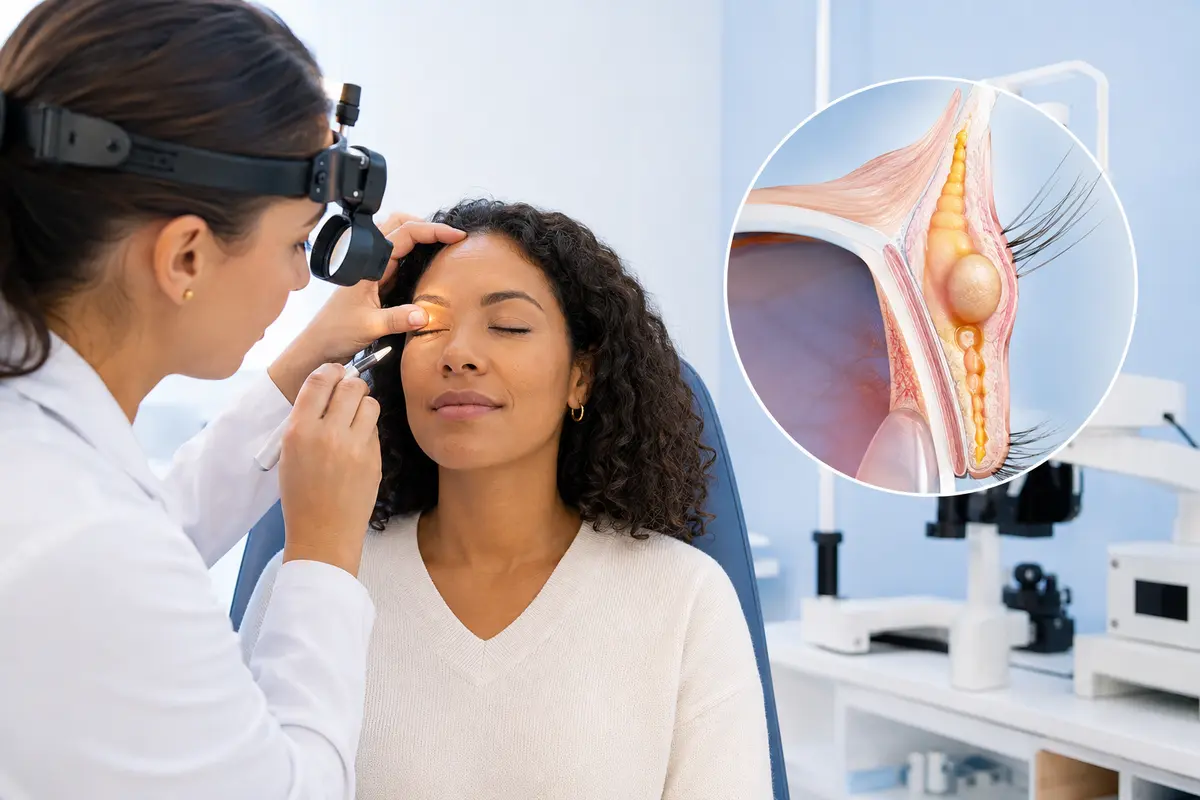
About chalazion
A chalazion is a usually painless eyelid lump caused by a blocked oil gland.
What can cause it?
A chalazion develops when an eyelid oil gland becomes blocked and inflamed.
Blepharitis and rosacea can increase recurrence.
What a patient may notice
Symptoms vary from person to person. Possible signs may include:
- Firm bump in the eyelid
- Mild tenderness or swelling
- Blurred vision if the bump presses on the eye
How clinicians find the cause
An eye clinician examines the lid and eye surface. A recurrent lump in the same location, lash loss, or unusual appearance may require biopsy or specialist evaluation.
Treatment and next steps
- 1
Warm compresses and gentle lid massage often allow drainage over several weeks.
- 2
Persistent or large chalazia may need a steroid injection or minor procedure.
- 3
Antibiotics are not routinely useful unless infection is present.
Supporting recovery
- Use a comfortably warm compress several times daily and do not squeeze the lump.
- Pause eye makeup and contact lenses during irritation.
What to expect
Many chalazia shrink and disappear within about a month with consistent warm compresses. Persistent or large lumps respond well to an injection or minor procedure, but chalazia can return. A recurrent lump in the same location needs eye-specialist review.
Possible complications
- Temporary blurred vision or astigmatism when a large chalazion presses on the eye
- Loss of eyelashes, a small eyelid notch, or a scar, particularly after repeated inflammation or surgery
- Delayed diagnosis of an uncommon eyelid tumor when an unusual or recurrent lump is assumed to be a chalazion
When to Contact a Medical Professional
Arrange an evaluation when symptoms are new, worsening, interfering with normal activities, or not improving as expected.
Eye pain, vision loss, fever, spreading facial redness, or severe swelling around the eye needs urgent evaluation.Get emergency help for severe trouble breathing, new chest pressure, fainting, seizure, sudden weakness on one side, uncontrolled bleeding, blue or gray lips, or a person who is difficult to wake.
Ways to lower risk
- Maintain eyelid hygiene and manage blepharitis or rosacea.
- Replace old eye makeup and avoid sharing products.
Trusted health information
This CHS patient-education page uses original wording and links to MedlinePlus for additional information.