
Chest Pain
Chest pain can come from the heart, lungs, digestive system, muscles, or ribs. Because some causes are life-threatening, new or unexplained chest pain must be taken seriously.
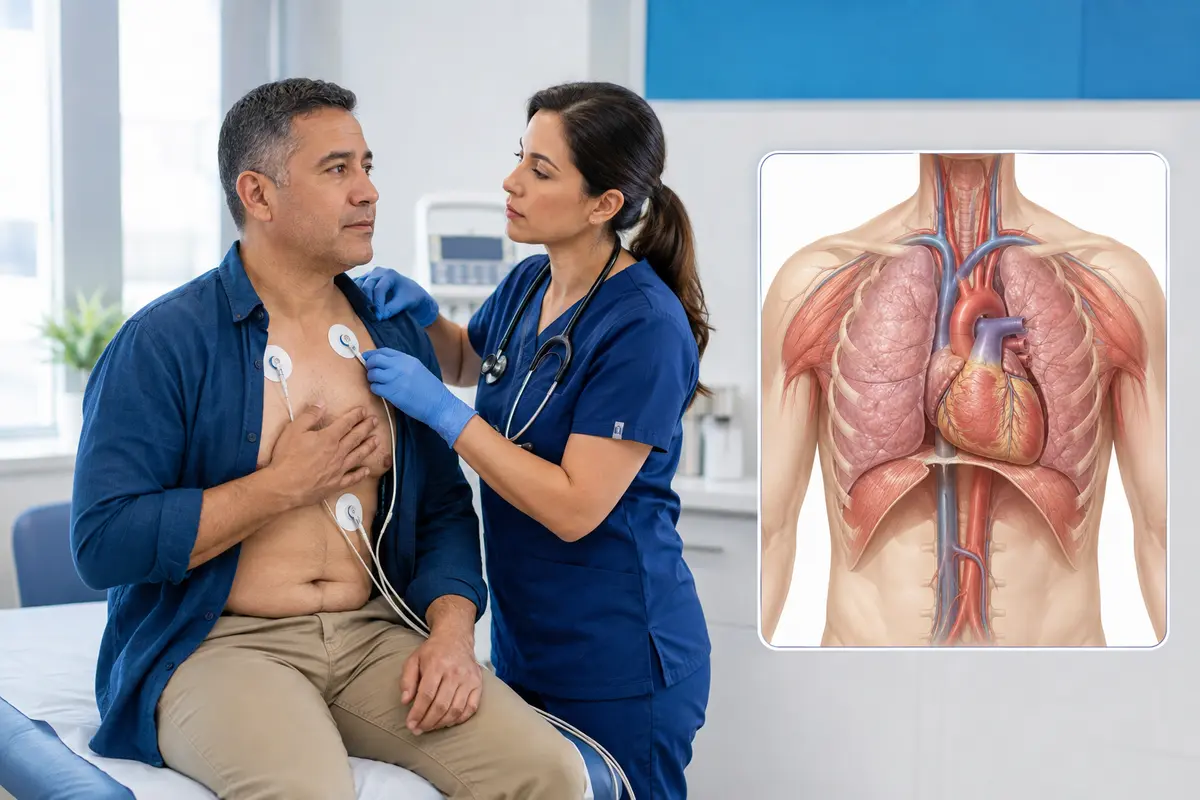
About chest pain
Chest pain can come from the heart, lungs, digestive system, muscles, or ribs. Because some causes are life-threatening, new or unexplained chest pain must be taken seriously.
What can cause it?
Chest pain may come from the heart, lungs, aorta, esophagus, stomach, ribs, muscles, nerves, or anxiety.
Heart attack, pulmonary embolism, aortic emergency, and collapsed lung can initially resemble less dangerous causes.
What a patient may notice
Symptoms vary from person to person. Possible signs may include:
- Pressure, tightness, burning, aching, or sharp pain
- Pain with breathing, movement, or exertion
- Shortness of breath, sweating, nausea, dizziness, or palpitations
How clinicians find the cause
Emergency assessment may include an ECG, repeated troponin blood tests, oxygen level, chest x-ray, and risk-based imaging. One normal test does not rule out every serious cause.
Treatment and next steps
- 1
New, severe, persistent, or unexplained chest pain requires emergency evaluation rather than self-diagnosis.
- 2
Treatment is directed at the cause and may range from anti-inflammatory care for chest-wall pain to urgent heart or lung procedures.
- 3
Do not drive yourself when a heart or lung emergency is possible.
Supporting recovery
- Call 911 and follow dispatcher instructions for concerning symptoms.
- Note the start time, triggers, radiation, breathing symptoms, and medicines taken.
What to expect
The outlook depends entirely on the cause. Muscle, rib, reflux, and some anxiety-related pain often improve with cause-specific treatment, while heart attack, blood clot in the lung, aortic disease, collapsed lung, and serious infection require immediate care. A reassuring initial evaluation does not replace re-evaluation when pain changes, persists, or returns.
Possible complications
- Heart damage, dangerous rhythm, heart failure, shock, or cardiac arrest from an untreated heart emergency
- Lung injury, low oxygen, or death from pulmonary embolism, pneumothorax, severe infection, or another lung emergency
- Delayed treatment of a serious cause when recurrent or changing pain is assumed to be indigestion or muscle strain
When to Contact a Medical Professional
This condition can be life-threatening. Call 911 or go to the nearest emergency department. Do not delay care to visit urgent care.
Call 911 for new, severe, persistent, or unexplained chest pain—especially with shortness of breath, sweating, fainting, or pain spreading to the arm, back, neck, or jaw.Get emergency help for severe trouble breathing, new chest pressure, fainting, seizure, sudden weakness on one side, uncontrolled bleeding, blue or gray lips, or a person who is difficult to wake.
Ways to lower risk
- Manage blood pressure, cholesterol, diabetes, tobacco exposure, and activity with a clinician.
- Use prescribed heart, lung, and reflux medicines consistently.
Trusted health information
This CHS patient-education page uses original wording and links to MedlinePlus for additional information.