
Cholecystitis
Cholecystitis is inflammation of the gallbladder, most often caused by a gallstone blocking bile flow.
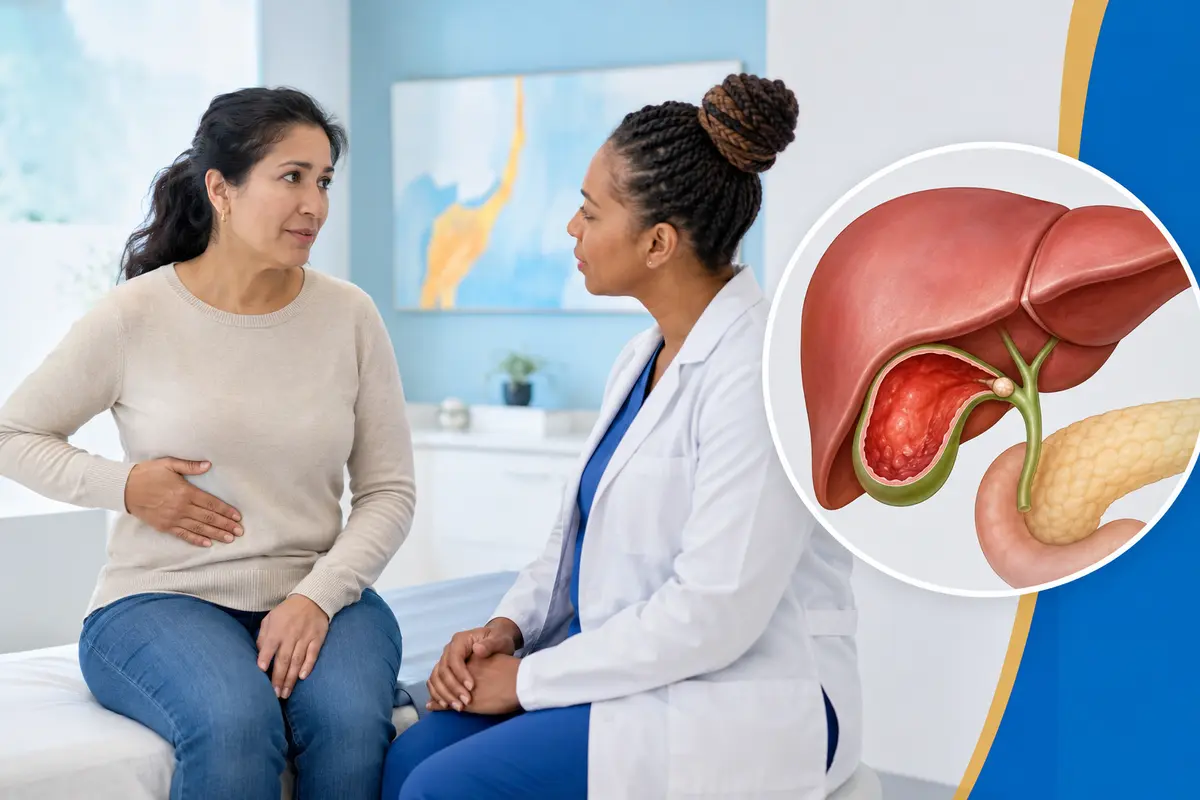
About cholecystitis
Cholecystitis is inflammation of the gallbladder, most often caused by a gallstone blocking bile flow.
What can cause it?
Cholecystitis usually occurs when a gallstone blocks the gallbladder outlet.
Less common causes include severe illness, bile-duct problems, or reduced gallbladder blood flow.
What a patient may notice
Symptoms vary from person to person. Possible signs may include:
- Persistent right upper abdominal pain
- Pain after eating or pain reaching the shoulder or back
- Fever, nausea, vomiting, or tenderness
How clinicians find the cause
Evaluation includes abdominal examination, blood count, liver and pancreas tests, and ultrasound. A HIDA scan, CT, or MRI may be used when the diagnosis is uncertain.
Treatment and next steps
- 1
Treatment often includes hospital monitoring, fluids, pain control, and antibiotics when infection is suspected.
- 2
Gallbladder removal is commonly recommended, sometimes during the same hospitalization.
- 3
A drainage tube may be used when surgery is temporarily unsafe.
Supporting recovery
- Seek same-day or emergency evaluation for persistent right upper abdominal pain.
- Avoid fatty meals while awaiting evaluation only if you can eat safely; do not delay care for vomiting or severe pain.
What to expect
Most people recover well when the inflammation is treated and the gallbladder is removed when recommended. Delayed treatment increases the chance of infection, tissue damage, or rupture. Repeated attacks can cause a thickened, scarred gallbladder that no longer stores and releases bile normally.
Possible complications
- Gallbladder infection, tissue death, perforation, or an abscess
- Bile-duct blockage, jaundice, pancreatitis, or infection of the bile ducts
- Recurrent attacks or chronic gallbladder inflammation when the underlying problem remains
When to Contact a Medical Professional
A same-day medical evaluation is recommended, especially when symptoms are severe, worsening, or accompanied by fever, vomiting, weakness, or significant pain.
Emergency care is needed for severe or persistent pain, repeated vomiting, jaundice, confusion, fainting, or high fever.Get emergency help for severe trouble breathing, new chest pressure, fainting, seizure, sudden weakness on one side, uncontrolled bleeding, blue or gray lips, or a person who is difficult to wake.
Ways to lower risk
- Healthy weight management may reduce gallstone risk; rapid weight loss can increase it.
- Known symptomatic gallstones should receive surgical follow-up.
Trusted health information
This CHS patient-education page uses original wording and links to MedlinePlus for additional information.