
Cirrhosis
Cirrhosis is advanced scarring of the liver that interferes with normal liver function.
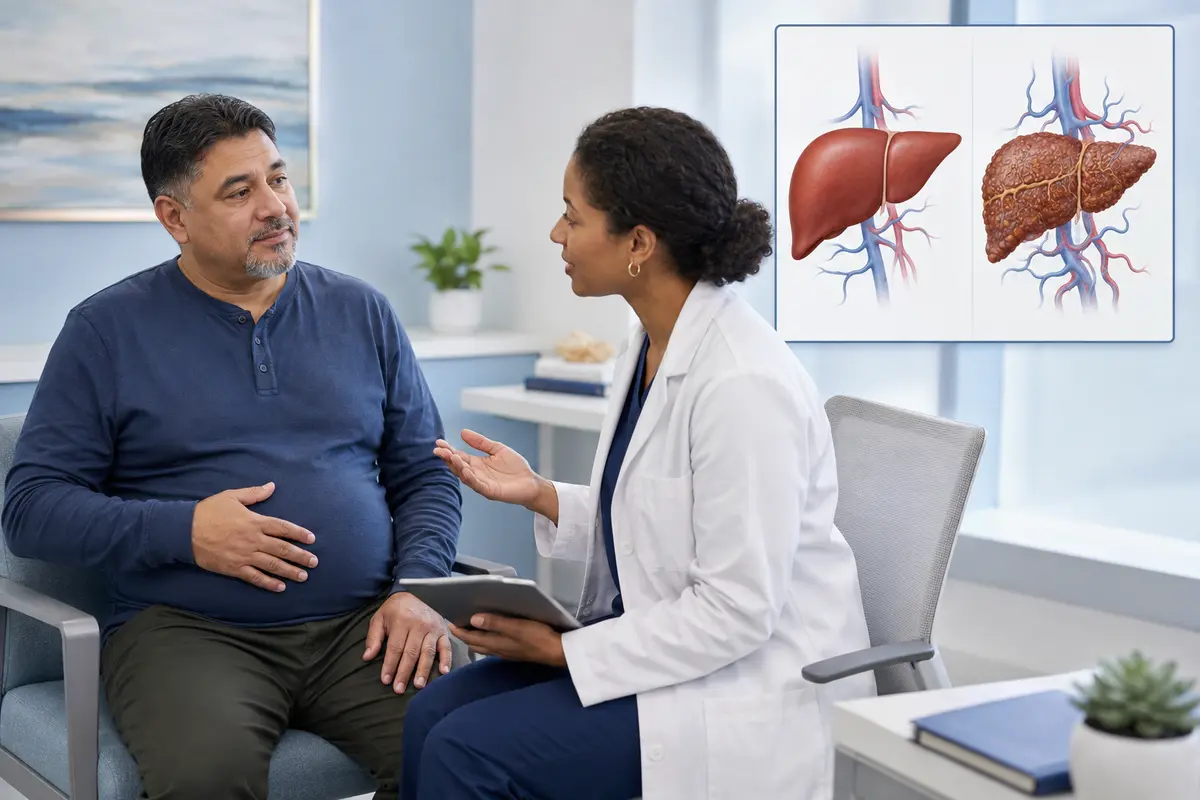
About cirrhosis
Cirrhosis is advanced scarring of the liver that interferes with normal liver function.
What can cause it?
Cirrhosis is permanent liver scarring from causes such as alcohol-associated liver disease, hepatitis B or C, fatty liver disease, autoimmune disease, or inherited conditions.
Complications include fluid buildup, bleeding, infection, confusion, and liver cancer.
What a patient may notice
Symptoms vary from person to person. Possible signs may include:
- Fatigue, poor appetite, or weight loss
- Abdominal or leg swelling
- Easy bruising, itching, jaundice, or confusion
How clinicians find the cause
Blood tests, ultrasound or other imaging, elastography, endoscopy, and sometimes biopsy assess cause, scarring, and complications.
Treatment and next steps
- 1
Treatment addresses the cause and prevents complications; this may include antiviral therapy, alcohol abstinence, weight and metabolic care, diuretics, endoscopic treatment, or transplant evaluation.
- 2
Medicines and supplements must be reviewed for liver safety.
- 3
Decompensated cirrhosis requires specialist care.
Supporting recovery
- Avoid alcohol and raw shellfish and follow individualized sodium and nutrition advice.
- Do not take new medicines, herbs, or pain relievers without checking with the liver team.
What to expect
Cirrhosis is permanent scarring, but treating the cause and preventing complications can preserve remaining liver function. Some people remain stable for years, while others develop fluid buildup, bleeding, confusion, or other signs of decompensation. Advanced disease may require liver-transplant evaluation.
Possible complications
- Portal hypertension with abdominal fluid, enlarged spleen, or bleeding veins in the esophagus or stomach
- Liver-related confusion, serious infection, kidney failure, easy bleeding, or severe malnutrition
- Liver cancer or progressive liver failure requiring transplant evaluation
When to Contact a Medical Professional
Arrange an evaluation when symptoms are new, worsening, interfering with normal activities, or not improving as expected.
Call 911 for vomiting blood, black stool, severe confusion, fainting, trouble breathing, or inability to wake the person.Get emergency help for severe trouble breathing, new chest pressure, fainting, seizure, sudden weakness on one side, uncontrolled bleeding, blue or gray lips, or a person who is difficult to wake.
Ways to lower risk
- Prevent and treat viral hepatitis, avoid harmful alcohol use, and manage metabolic disease.
- Keep liver-cancer and varices screening appointments.
Trusted health information
This CHS patient-education page uses original wording and links to MedlinePlus for additional information.