
Compartment Syndrome
Compartment syndrome occurs when pressure builds inside a muscle compartment and reduces blood flow. Acute compartment syndrome is a surgical emergency.
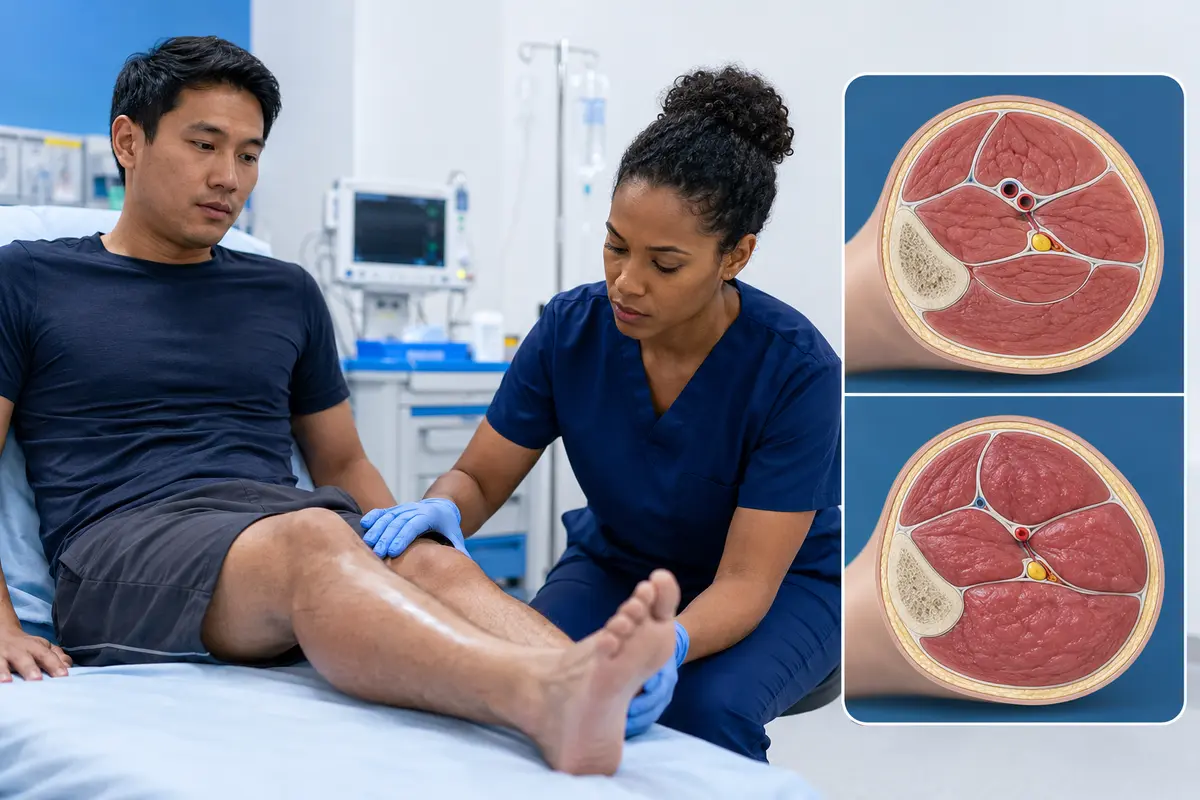
About compartment syndrome
Compartment syndrome occurs when pressure builds inside a muscle compartment and reduces blood flow. Acute compartment syndrome is a surgical emergency.
What can cause it?
Acute compartment syndrome follows bleeding or swelling inside a closed muscle compartment after fracture, crush injury, tight cast, burn, or intense exertion.
Pressure blocks blood flow and damages muscles and nerves.
What a patient may notice
Symptoms vary from person to person. Possible signs may include:
- Severe pain out of proportion to the injury
- Tight, firm, swollen limb
- Increasing pain with movement, numbness, or weakness
How clinicians find the cause
Emergency diagnosis uses severe pain, tight swelling, pain with passive stretch, nerve symptoms, and sometimes direct compartment-pressure measurement. Normal pulses do not rule it out.
Treatment and next steps
- 1
Immediate surgical fasciotomy releases pressure and saves tissue.
- 2
Tight dressings or casts are removed by clinicians while emergency surgery is arranged.
- 3
There is no safe home treatment.
Supporting recovery
- Go to the emergency department immediately for suspected symptoms.
- Do not elevate an affected limb far above heart level or delay for ice and pain medicine.
What to expect
Acute compartment syndrome can permanently damage muscle and nerves within hours. The best outcomes occur when pressure is recognized and surgically released immediately. Recovery depends on how long blood flow was reduced and may require wound care, additional procedures, and rehabilitation.
Possible complications
- Permanent muscle and nerve damage with weakness, numbness, stiffness, or contracture
- Muscle death, infection, kidney injury from muscle breakdown, or loss of limb
- Chronic pain, reduced function, scarring, or the need for additional surgery
When to Contact a Medical Professional
This condition can be life-threatening. Call 911 or go to the nearest emergency department. Do not delay care to visit urgent care.
Go to the emergency department immediately. Do not wait for numbness, weakness, or loss of pulse.Get emergency help for severe trouble breathing, new chest pressure, fainting, seizure, sudden weakness on one side, uncontrolled bleeding, blue or gray lips, or a person who is difficult to wake.
Ways to lower risk
- Follow cast and splint instructions and report rapidly increasing pain or tightness.
- Use safe training and hydration for exertional risk.
Trusted health information
This CHS patient-education page uses original wording and links to MedlinePlus for additional information.