
Compression Fractures of the Back
A spinal compression fracture occurs when a vertebra collapses, often because of osteoporosis, trauma, or another bone condition.
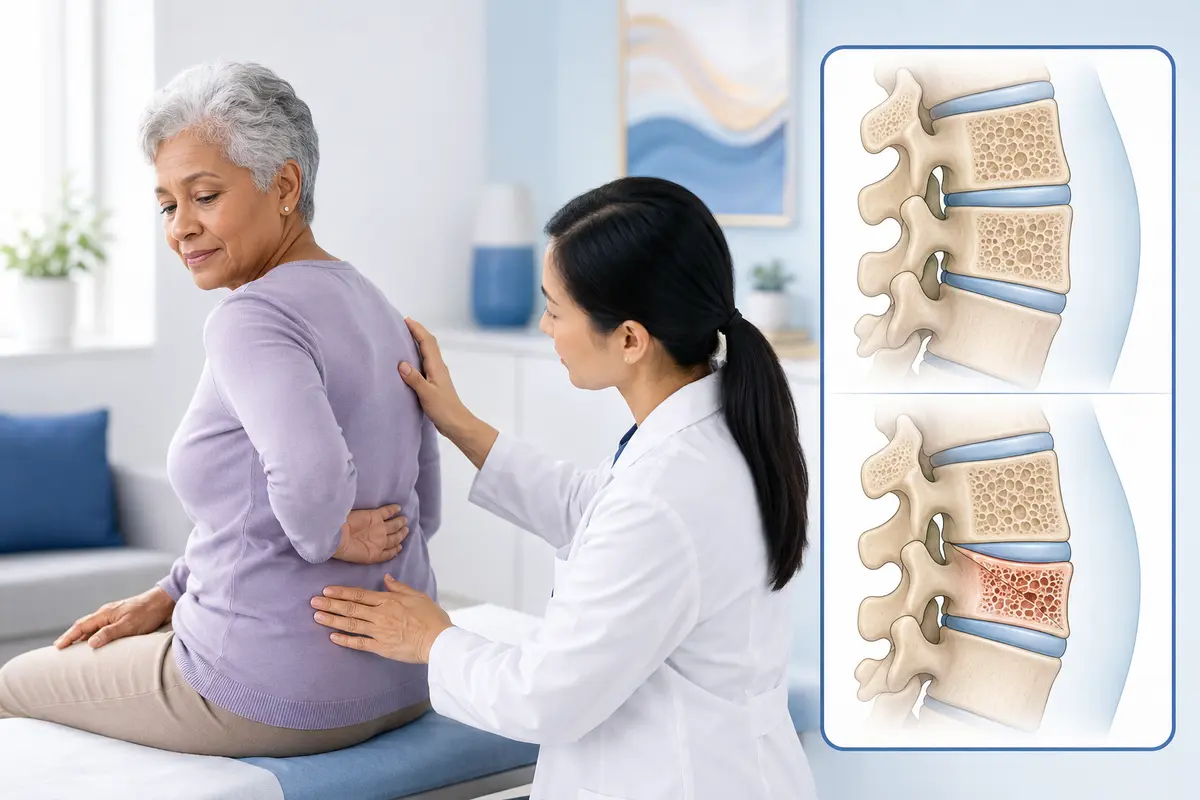
About compression fractures of the back
A spinal compression fracture occurs when a vertebra collapses, often because of osteoporosis, trauma, or another bone condition.
What can cause it?
Vertebral compression fractures commonly occur when osteoporosis weakens the spine; trauma, cancer, and infection are other causes.
Some fractures cause sudden pain while others are found after height loss or posture change.
What a patient may notice
Symptoms vary from person to person. Possible signs may include:
- Sudden or gradually worsening back pain
- Pain worse with standing or walking
- Loss of height or a more curved posture
How clinicians find the cause
Examination and spine x-rays identify many fractures. MRI or CT helps determine age, nerve involvement, or an underlying tumor or infection. Bone-density and laboratory testing may assess fragility.
Treatment and next steps
- 1
Treatment may include short-term pain control, gradual activity, bracing in selected patients, and osteoporosis therapy.
- 2
Procedures are reserved for specific persistent or unstable cases.
- 3
Neurologic compression requires urgent specialist care.
Supporting recovery
- Avoid heavy lifting and prolonged bed rest; use an individualized safe-movement plan.
- Begin physical therapy and posture or balance work as directed.
What to expect
Many injury-related compression fractures heal in about 8 to 10 weeks, although recovery may take longer after surgery. Osteoporosis-related fractures often become less painful with treatment, but lost vertebral height cannot be restored without a procedure and some people develop chronic pain or disability. Treating osteoporosis helps prevent additional fractures.
Possible complications
- Loss of height, kyphosis, or progressive change in posture
- Long-lasting back pain, reduced mobility, or disability
- Rare spinal cord or nerve-root compression with weakness, numbness, or bladder or bowel problems
When to Contact a Medical Professional
A same-day medical evaluation is recommended, especially when symptoms are severe, worsening, or accompanied by fever, vomiting, weakness, or significant pain.
Call 911 for new leg weakness or numbness, loss of bladder or bowel control, numbness around the groin, or major trauma.Get emergency help for severe trouble breathing, new chest pressure, fainting, seizure, sudden weakness on one side, uncontrolled bleeding, blue or gray lips, or a person who is difficult to wake.
Ways to lower risk
- Treat osteoporosis, prevent falls, use adequate calcium and vitamin D as appropriate, and perform weight-bearing exercise safely.
- Avoid tobacco and excess alcohol.
Trusted health information
This CHS patient-education page uses original wording and links to MedlinePlus for additional information.