
Concussion - Child
A child can have a concussion after a blow or jolt even without losing consciousness. Symptoms may appear immediately or over the next hours.
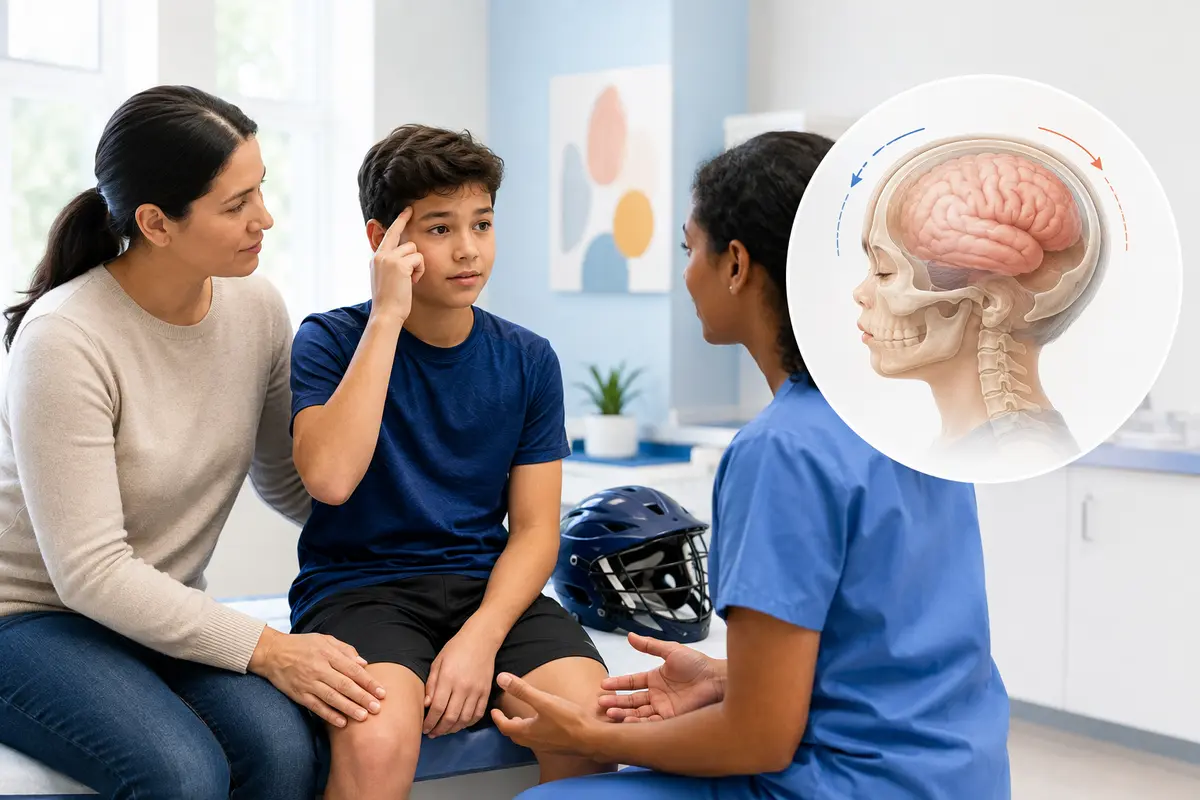
About concussion - child
A child can have a concussion after a blow or jolt even without losing consciousness. Symptoms may appear immediately or over the next hours.
What can cause it?
Children may sustain concussion from falls, sports, collisions, or a body impact that moves the brain inside the skull.
Young children may show behavior, feeding, sleep, or balance changes instead of describing symptoms.
What a patient may notice
Symptoms vary from person to person. Possible signs may include:
- Headache, dizziness, nausea, or balance problems
- Irritability, unusual crying, or behavior change
- Confusion, slow responses, sleep change, or school difficulty
How clinicians find the cause
Evaluation includes age-appropriate memory, behavior, balance, neurologic examination, and injury details. Imaging is used only when signs suggest bleeding or fracture.
Treatment and next steps
- 1
After brief relative rest, the child gradually returns to school and light activity with symptom-based adjustments.
- 2
Return to sports follows a supervised multi-step progression only after return to normal learning and clinical clearance.
- 3
Medicine use should be reviewed with the child's clinician.
Supporting recovery
- Provide quiet supervision and record vomiting, headache, behavior, sleep, and balance changes.
- Limit screens only when they worsen symptoms; avoid total prolonged isolation.
What to expect
Most children recover gradually over days to weeks, although some symptoms last for months. A coordinated return to school comes before full return to sports. Symptoms that worsen or reappear with activity mean the child needs to slow down and be reassessed.
Possible complications
- Ongoing headache, dizziness, sleep, mood, memory, or school-performance problems
- Delayed recovery when activity increases too quickly or symptoms are not recognized
- A more serious second brain injury if another impact occurs before full recovery
When to Contact a Medical Professional
A same-day medical evaluation is recommended, especially when symptoms are severe, worsening, or accompanied by fever, vomiting, weakness, or significant pain.
Call 911 for repeated vomiting, seizure, worsening severe headache, weakness, unequal pupils, slurred speech, increasing confusion, or difficulty waking the child.Get emergency help for severe trouble breathing, new chest pressure, fainting, seizure, sudden weakness on one side, uncontrolled bleeding, blue or gray lips, or a person who is difficult to wake.
Ways to lower risk
- Use age-appropriate car seats, seat belts, helmets, safe play areas, and sports technique.
- Teach children to report symptoms immediately.
Trusted health information
This CHS patient-education page uses original wording and links to MedlinePlus for additional information.