
Conjunctivitis
Conjunctivitis is inflammation of the clear membrane covering the white of the eye and inner eyelid. Causes include viruses, bacteria, allergies, and irritation.
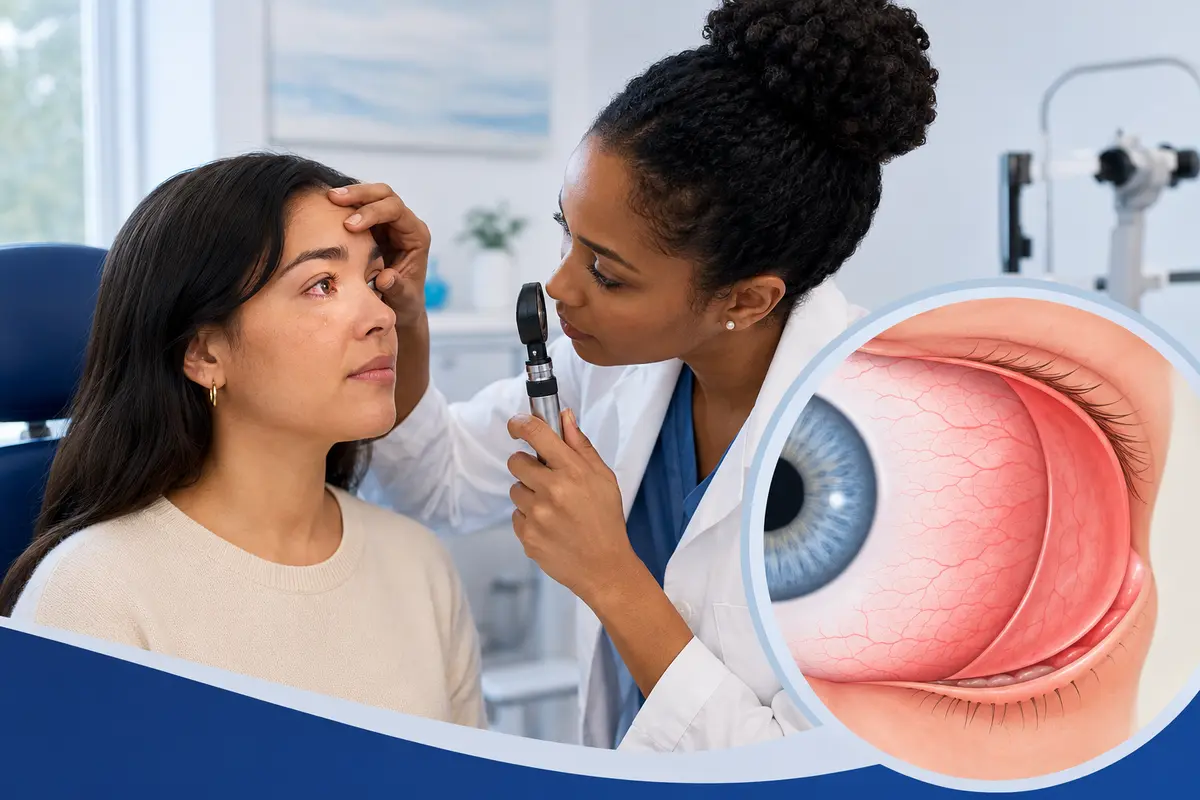
About conjunctivitis
Conjunctivitis is inflammation of the clear membrane covering the white of the eye and inner eyelid. Causes include viruses, bacteria, allergies, and irritation.
What can cause it?
Conjunctivitis may be viral, bacterial, allergic, or caused by chemical or mechanical irritation.
The pattern of itching, discharge, pain, exposure, and one-eye versus two-eye involvement helps distinguish causes.
What a patient may notice
Symptoms vary from person to person. Possible signs may include:
- Red or pink eye
- Watery or thick discharge
- Itching, burning, gritty feeling, or crusted lashes
How clinicians find the cause
An eye examination checks vision, cornea, eyelids, discharge, pain, contact-lens use, and exposure. Culture is reserved for severe, recurrent, neonatal, or treatment-resistant cases.
Treatment and next steps
- 1
Viral conjunctivitis usually receives supportive care; bacterial cases may need antibiotic drops; allergy treatment targets allergens.
- 2
Antibiotics do not treat viral or allergic disease.
- 3
Contact-lens wearers with pain need same-day corneal evaluation.
Supporting recovery
- Wash hands, avoid touching the eyes, use separate towels, and discard contaminated eye makeup.
- Stop contact lenses until cleared and replace or disinfect supplies.
What to expect
Many viral cases resolve on their own, bacterial cases often improve with appropriate treatment, and allergic cases improve when the trigger is controlled. Symptoms should steadily improve; pain, light sensitivity, or vision change suggests the cornea or deeper eye may be involved rather than simple conjunctivitis.
Possible complications
- Spread to other people or from one eye to the other in infectious cases
- Corneal infection, ulcer, or scarring—especially with contact-lens-related disease
- Persistent irritation, recurrent symptoms, or reduced vision when the diagnosis or treatment is incomplete
When to Contact a Medical Professional
Arrange an evaluation when symptoms are new, worsening, interfering with normal activities, or not improving as expected.
Eye pain, light sensitivity, vision changes, chemical exposure, contact-lens use with pain, or severe swelling needs urgent eye evaluation.Get emergency help for severe trouble breathing, new chest pressure, fainting, seizure, sudden weakness on one side, uncontrolled bleeding, blue or gray lips, or a person who is difficult to wake.
Ways to lower risk
- Hand hygiene and avoiding shared eye products reduce spread.
- Use protective eyewear around irritants.
Trusted health information
This CHS patient-education page uses original wording and links to MedlinePlus for additional information.