
Contact Dermatitis
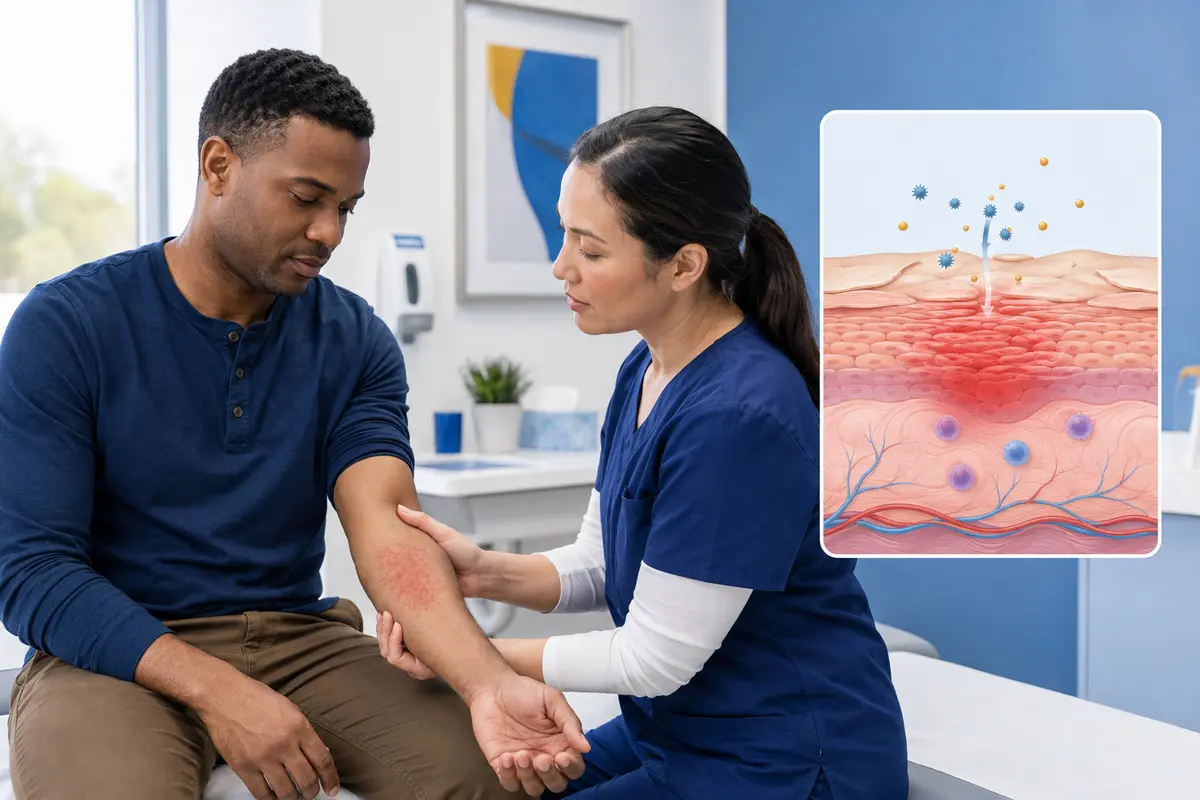
Contact dermatitis is a skin reaction caused by direct exposure to an irritant or allergen.
About contact dermatitis
Contact dermatitis is a skin reaction caused by direct exposure to an irritant or allergen.
What can cause it?
Irritant dermatitis follows direct skin damage from soaps, chemicals, moisture, or friction; allergic dermatitis is a delayed immune reaction to substances such as nickel, fragrance, or plants.
Repeated exposure can turn a mild rash into chronic cracked skin.
What a patient may notice
Symptoms vary from person to person. Possible signs may include:
- Itchy or burning rash
- Redness, swelling, bumps, or blisters
- Dry, cracked, or oozing skin where exposure occurred
How clinicians find the cause
Diagnosis uses rash location and exposure timing. Patch testing may identify an allergen when the rash is recurrent or occupational.
Treatment and next steps
- 1
Remove the trigger, restore the skin barrier with bland moisturizer, and use prescribed topical anti-inflammatory treatment when needed.
- 2
Wet or infected rash may need dressings or antimicrobial treatment.
- 3
Systemic steroids are reserved for selected widespread reactions.
Supporting recovery
- Rinse off recent exposure, use cool compresses, and avoid scratching.
- Choose fragrance-free products and protective gloves suited to the exposure.
What to expect
Most contact dermatitis clears within about 2 to 3 weeks after the trigger is removed and the skin is treated. It can return when the responsible substance is not identified or cannot be avoided. Repeated workplace or household exposure may cause long-lasting hand or skin inflammation.
Possible complications
- Bacterial skin infection from cracked, open, or scratched skin
- Chronic thickened, painful, or repeatedly inflamed skin
- Recurring symptoms or work limitations when an allergen or irritant cannot be avoided
When to Contact a Medical Professional
Mild symptoms may sometimes be managed with general supportive care, but a clinician should evaluate symptoms that persist, spread, become painful, or worsen.
Call 911 for trouble breathing or facial or throat swelling. Seek prompt care for widespread blistering, eye involvement, fever, pus, or rapidly spreading redness.Get emergency help for severe trouble breathing, new chest pressure, fainting, seizure, sudden weakness on one side, uncontrolled bleeding, blue or gray lips, or a person who is difficult to wake.
Ways to lower risk
- Read labels, substitute safer products, and use barrier protection.
- Document confirmed allergens for work and healthcare settings.
Trusted health information
This CHS patient-education page uses original wording and links to MedlinePlus for additional information.