
Corneal Injury
A corneal injury is damage to the clear front surface of the eye from a scratch, foreign object, chemical, or other trauma.
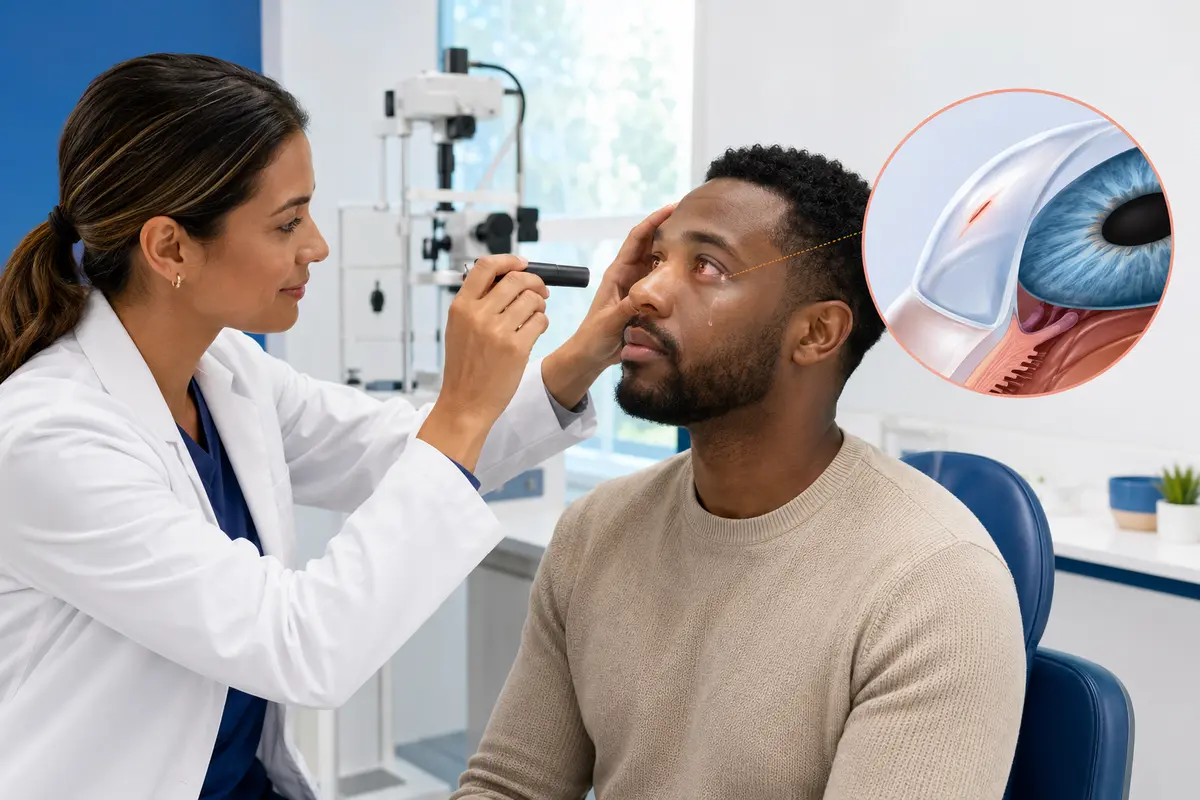
About corneal injury
A corneal injury is damage to the clear front surface of the eye from a scratch, foreign object, chemical, or other trauma.
What can cause it?
The cornea may be scratched by a fingernail, contact lens, foreign body, plant material, chemical, or high-speed particle.
A small surface injury can become infected or scar and affect vision.
What a patient may notice
Symptoms vary from person to person. Possible signs may include:
- Eye pain or a gritty sensation
- Tearing, redness, or light sensitivity
- Blurred vision or difficulty keeping the eye open
How clinicians find the cause
An eye professional checks vision, uses fluorescein dye and magnification, and everts the eyelid to look for a foreign body. Penetrating injury or metal exposure may require imaging.
Treatment and next steps
- 1
Treatment may include foreign-body removal, antibiotic drops or ointment, lubrication, and pain control.
- 2
Contact-lens-related injuries need special infection coverage and close follow-up.
- 3
Do not use numbing eye drops at home or patch the eye unless an eye professional directs it.
Supporting recovery
- Rinse loose particles with clean water or saline and avoid rubbing.
- Remove contact lenses and do not attempt to remove an embedded object.
What to expect
Many superficial corneal scratches heal within a few days with appropriate treatment, but deeper, contaminated, chemical, or contact-lens-related injuries need closer follow-up. Vision should return to normal as the surface heals. Persistent pain, redness, or blurred vision can mean infection or incomplete healing.
Possible complications
- Corneal infection or ulcer, especially after contact-lens, plant, or contaminated-object injury
- Corneal scarring with glare, irregular vision, or permanent vision loss
- Recurrent corneal erosion that causes repeated pain after the original injury appears healed
When to Contact a Medical Professional
A same-day medical evaluation is recommended, especially when symptoms are severe, worsening, or accompanied by fever, vomiting, weakness, or significant pain.
Chemical exposure, penetrating injury, sudden vision loss, severe pain, or a high-speed metal or glass injury needs emergency eye care.Get emergency help for severe trouble breathing, new chest pressure, fainting, seizure, sudden weakness on one side, uncontrolled bleeding, blue or gray lips, or a person who is difficult to wake.
Ways to lower risk
- Wear protective eyewear for tools, yard work, chemicals, and sports.
- Use careful contact-lens hygiene.
Trusted health information
This CHS patient-education page uses original wording and links to MedlinePlus for additional information.