
Corneal Ulcers
A corneal ulcer is an open sore on the eye's clear front surface, often caused by infection. It can threaten vision.
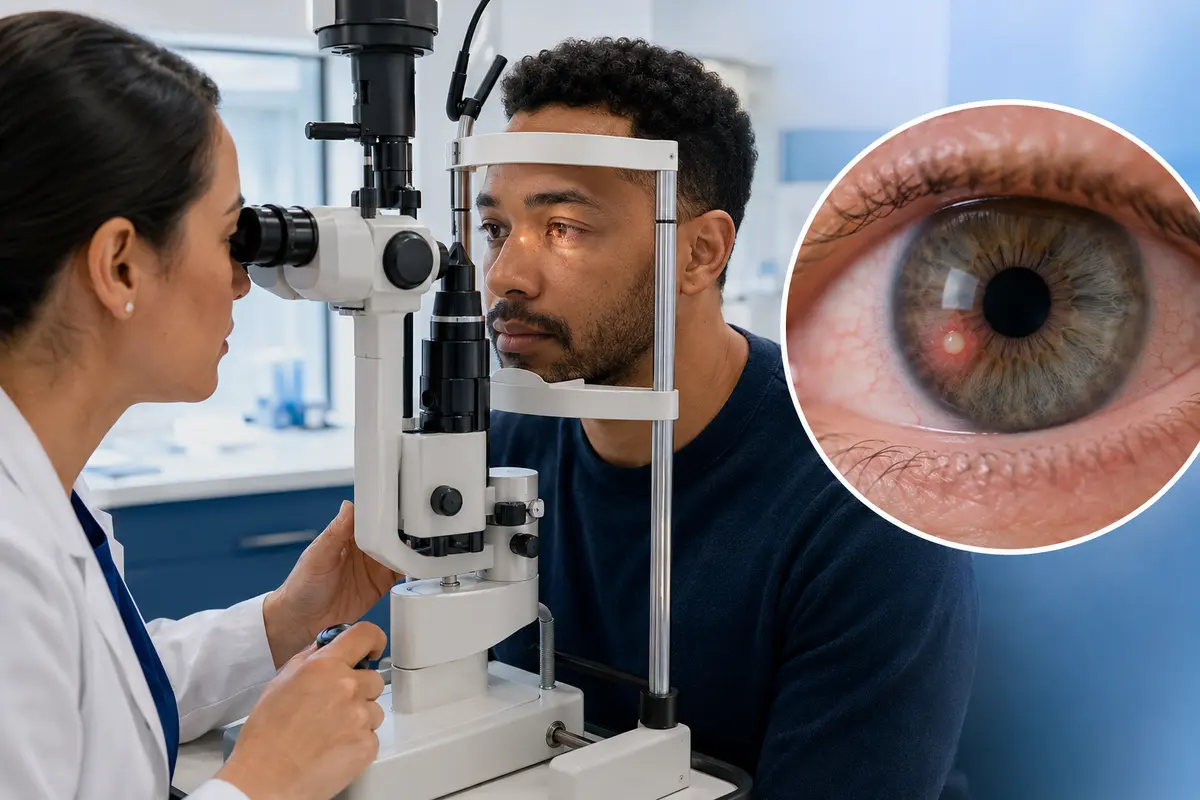
About corneal ulcers
A corneal ulcer is an open sore on the eye's clear front surface, often caused by infection. It can threaten vision.
What can cause it?
Corneal ulcers are commonly caused by bacterial, viral, fungal, or parasitic infection after contact-lens use, injury, or severe dry eye.
They can scar the cornea and threaten vision quickly.
What a patient may notice
Symptoms vary from person to person. Possible signs may include:
- Severe eye pain or redness
- Light sensitivity and tearing
- Discharge, blurred vision, or a white spot on the cornea
How clinicians find the cause
Urgent eye examination uses a slit lamp, fluorescein dye, and often a corneal scraping or culture to identify the organism.
Treatment and next steps
- 1
Frequent prescription antimicrobial eye drops are started urgently and adjusted to test results.
- 2
Steroid drops are used only by an eye specialist in selected cases.
- 3
Severe ulcers may require hospitalization or corneal surgery.
Supporting recovery
- Stop contact lenses immediately and bring the lenses and case to the visit.
- Do not use leftover drops or cover the eye.
What to expect
The outlook depends on the organism, ulcer size and location, and how quickly treatment begins. Small ulcers treated promptly may heal with little effect on vision. Central, deep, resistant, or delayed-treatment ulcers can leave a scar and may require prolonged medicine or corneal surgery.
Possible complications
- Permanent corneal scarring, irregular vision, or severe vision loss
- Corneal thinning or perforation with infection spreading inside the eye
- Need for hospitalization, corneal transplant, or rarely loss of the eye
When to Contact a Medical Professional
A same-day medical evaluation is recommended, especially when symptoms are severe, worsening, or accompanied by fever, vomiting, weakness, or significant pain.
Seek emergency eye evaluation now for suspected corneal ulcer, especially with contact-lens use, vision change, severe pain, or discharge.Get emergency help for severe trouble breathing, new chest pressure, fainting, seizure, sudden weakness on one side, uncontrolled bleeding, blue or gray lips, or a person who is difficult to wake.
Ways to lower risk
- Never sleep, swim, or shower in lenses unless specifically approved, and replace lens cases regularly.
- Protect eyes from injury and treat dry-eye disease.
Trusted health information
This CHS patient-education page uses original wording and links to MedlinePlus for additional information.