
Coronavirus
Coronaviruses cause respiratory illnesses ranging from the common cold to COVID-19. Symptoms and severity vary by virus and individual risk.
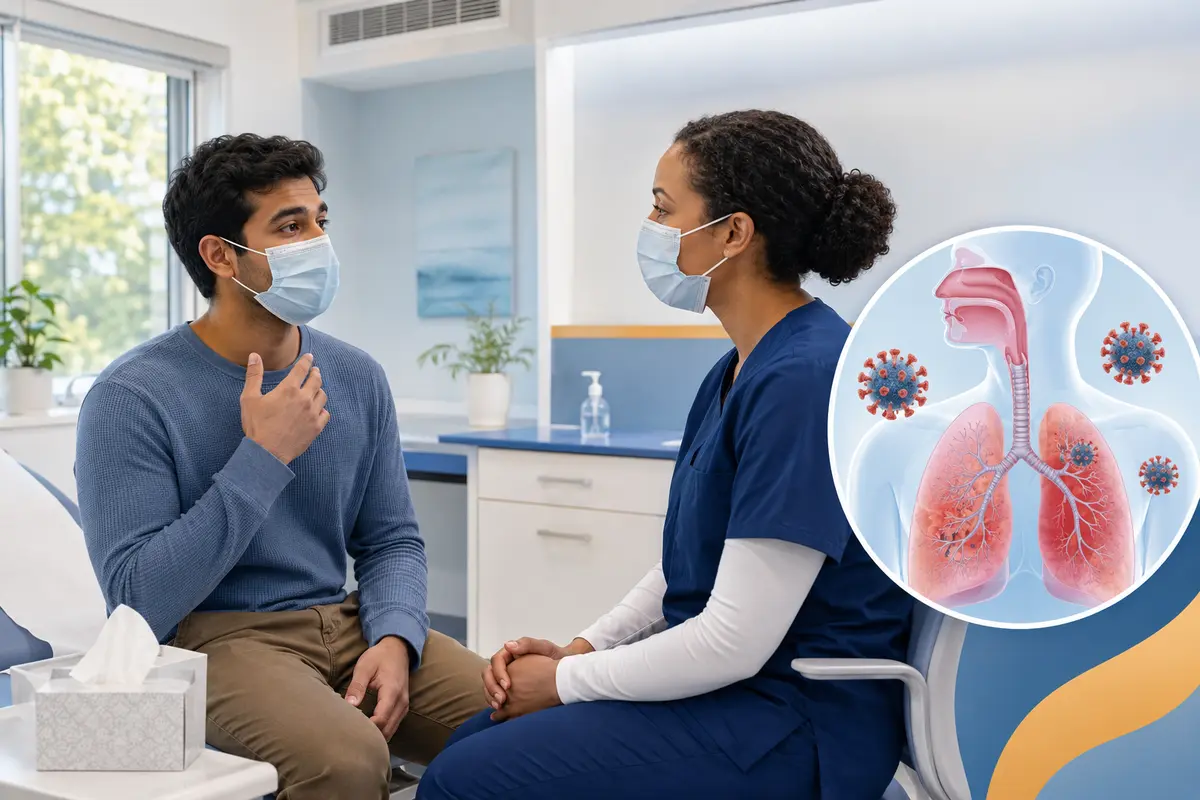
About coronavirus
Coronaviruses cause respiratory illnesses ranging from the common cold to COVID-19. Symptoms and severity vary by virus and individual risk.
What can cause it?
Coronaviruses cause respiratory illnesses; SARS-CoV-2 causes COVID-19.
Spread occurs mainly through respiratory particles, especially in close indoor contact.
What a patient may notice
Symptoms vary from person to person. Possible signs may include:
- Fever, chills, cough, or sore throat
- Congestion, fatigue, body aches, or headache
- Shortness of breath, nausea, diarrhea, or change in taste or smell
How clinicians find the cause
Testing may include a home antigen test or laboratory molecular test. Examination, oxygen measurement, chest imaging, and blood tests are used for moderate or severe illness.
Treatment and next steps
- 1
Mild illness is often managed with fluids, rest, and symptom care.
- 2
People at higher risk may qualify for time-sensitive antiviral treatment, so early clinician contact matters.
- 3
Antibiotics do not treat the virus unless a bacterial infection is also present.
Supporting recovery
- Follow current public-health guidance on staying home, masking, and protecting high-risk contacts.
- Monitor breathing and hydration; use a pulse oximeter only with proper instructions.
What to expect
Many coronavirus infections are mild and improve with supportive care, but COVID-19 can become serious—especially in older adults and people with certain medical conditions. Early evaluation matters because some higher-risk patients qualify for time-sensitive treatment. Some people have symptoms that continue after the initial infection.
Possible complications
- Pneumonia, low oxygen, acute respiratory distress syndrome, or respiratory failure
- Blood clots, heart, kidney, neurologic, or other organ complications in severe COVID-19
- Post-COVID conditions with fatigue, breathing, concentration, sleep, or other persistent symptoms
When to Contact a Medical Professional
Arrange an evaluation when symptoms are new, worsening, interfering with normal activities, or not improving as expected.
Call 911 for severe trouble breathing, chest pressure, new confusion, inability to wake, or pale, gray, or blue lips or skin.Get emergency help for severe trouble breathing, new chest pressure, fainting, seizure, sudden weakness on one side, uncontrolled bleeding, blue or gray lips, or a person who is difficult to wake.
Ways to lower risk
- Stay current with recommended vaccination, improve ventilation, use masks in higher-risk settings, and practice hand hygiene.
- Test after relevant exposure or symptoms as currently advised.
Trusted health information
This CHS patient-education page uses original wording and links to MedlinePlus for additional information.