
Cyst
A cyst is a closed sac under the skin or within the body that may contain fluid, air, or other material. Evaluation depends on its location and symptoms.
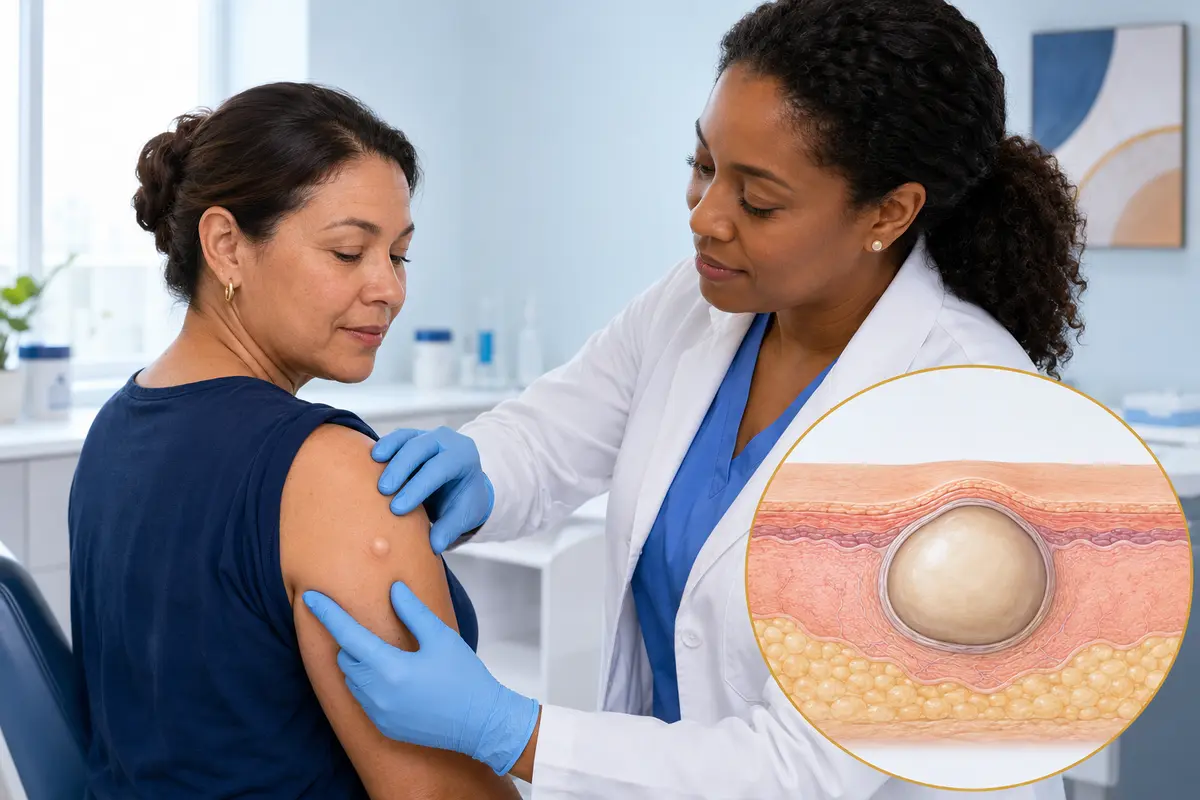
About cyst
A cyst is a closed sac under the skin or within the body that may contain fluid, air, or other material. Evaluation depends on its location and symptoms.
What can cause it?
A cyst is a sac containing fluid or other material and may form from blocked glands, development, injury, infection, or inflammation.
Its significance depends on location, size, growth, and symptoms.
What a patient may notice
Symptoms vary from person to person. Possible signs may include:
- Round or smooth lump
- May be painless, tender, or inflamed
- May grow, drain, or become red if infected
How clinicians find the cause
Examination may be enough for a typical skin cyst. Ultrasound, x-ray, CT, MRI, aspiration, or biopsy may be needed for deep, internal, growing, or atypical cysts.
Treatment and next steps
- 1
Small painless cysts may be monitored.
- 2
Painful, infected, compressive, or uncertain cysts may need drainage, medicine, removal, or specialist care.
- 3
Do not squeeze or puncture a cyst at home.
Supporting recovery
- Track growth, pain, redness, and drainage.
- Use a warm compress only for a small superficial inflamed cyst while arranging care.
What to expect
The outlook depends on the cyst's type and location. Many small skin cysts are benign and can be monitored, while painful, growing, recurrent, infected, or internal cysts may need imaging, drainage, biopsy, removal, or specialist care. A removed cyst can recur if its lining remains.
Possible complications
- Inflammation, infection, rupture, drainage, or scarring
- Pressure on nearby nerves, organs, airways, or other structures depending on location
- Recurrence after drainage or delayed diagnosis when a lump is not actually a simple cyst
When to Contact a Medical Professional
Arrange an evaluation when symptoms are new, worsening, interfering with normal activities, or not improving as expected.
Seek urgent care for rapid growth, severe pain, fever, spreading redness, neurologic symptoms, trouble breathing, or a lump after major injury.Get emergency help for severe trouble breathing, new chest pressure, fainting, seizure, sudden weakness on one side, uncontrolled bleeding, blue or gray lips, or a person who is difficult to wake.
Ways to lower risk
- Many cysts cannot be prevented.
- Skin care and treatment of blocked glands may reduce some types.
Trusted health information
This CHS patient-education page uses original wording and links to MedlinePlus for additional information.