
Deep Vein Thrombosis
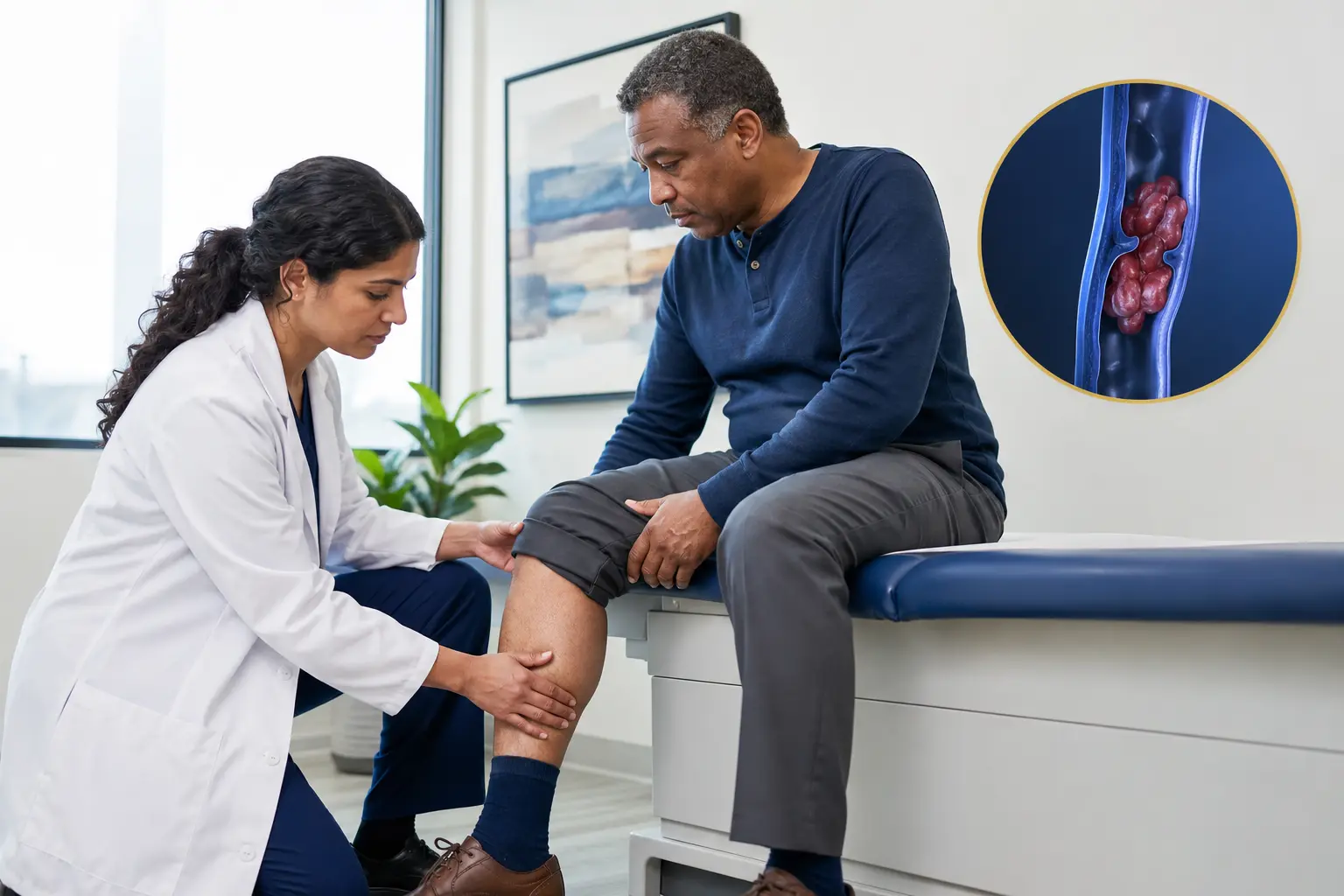
Deep vein thrombosis (DVT) is a blood clot in a deep vein, usually in a leg. The clot can travel to the lungs and become life-threatening.
About deep vein thrombosis
Deep vein thrombosis (DVT) is a blood clot in a deep vein, usually in a leg. The clot can travel to the lungs and become life-threatening.
What can cause it?
DVT forms when blood clots in a deep vein, often after immobility, surgery, cancer, pregnancy, estrogen use, major injury, or inherited clotting risk.
Part of the clot can travel to the lungs as a pulmonary embolism.
What a patient may notice
Symptoms vary from person to person. Possible signs may include:
- New swelling in one leg or arm
- Pain, tenderness, warmth, or redness
- Symptoms that appear without a clear injury
How clinicians find the cause
Risk assessment, D-dimer blood testing in selected patients, and compression ultrasound are commonly used. Additional imaging may be needed for pelvic or upper-extremity clots.
Treatment and next steps
- 1
Anticoagulant medicine prevents growth and new clots; the choice and duration depend on cause, bleeding risk, pregnancy, kidney function, and cancer status.
- 2
Selected severe clots need catheter procedures or clot-dissolving treatment.
- 3
Do not massage a possibly clotted limb.
Supporting recovery
- Take anticoagulants exactly as prescribed and report bleeding.
- Follow instructions on activity, compression, travel, and medicine interactions.
What to expect
Prompt diagnosis and anticoagulant treatment prevent most clots from enlarging or reaching the lungs. Treatment commonly continues for months and may be longer when the clot was unprovoked or risk remains. Follow-up balances the risk of another clot against the risk of bleeding from treatment.
Possible complications
- Pulmonary embolism if part of the clot travels to the lungs
- Post-thrombotic syndrome with long-term swelling, heaviness, skin change, or ulcers in the affected limb
- Recurrent DVT or significant bleeding while taking an anticoagulant
When to Contact a Medical Professional
A same-day medical evaluation is recommended, especially when symptoms are severe, worsening, or accompanied by fever, vomiting, weakness, or significant pain.
Call 911 immediately for sudden shortness of breath, chest pain, coughing blood, fainting, or a rapid heartbeat.Get emergency help for severe trouble breathing, new chest pressure, fainting, seizure, sudden weakness on one side, uncontrolled bleeding, blue or gray lips, or a person who is difficult to wake.
Ways to lower risk
- Move regularly during travel or recovery and use hospital prevention measures.
- Discuss estrogen and prior clot history with clinicians.
Trusted health information
This CHS patient-education page uses original wording and links to MedlinePlus for additional information.