
Dermatomyositis
Dermatomyositis is an inflammatory disease that causes muscle weakness and a characteristic skin rash. It requires medical evaluation and ongoing care.
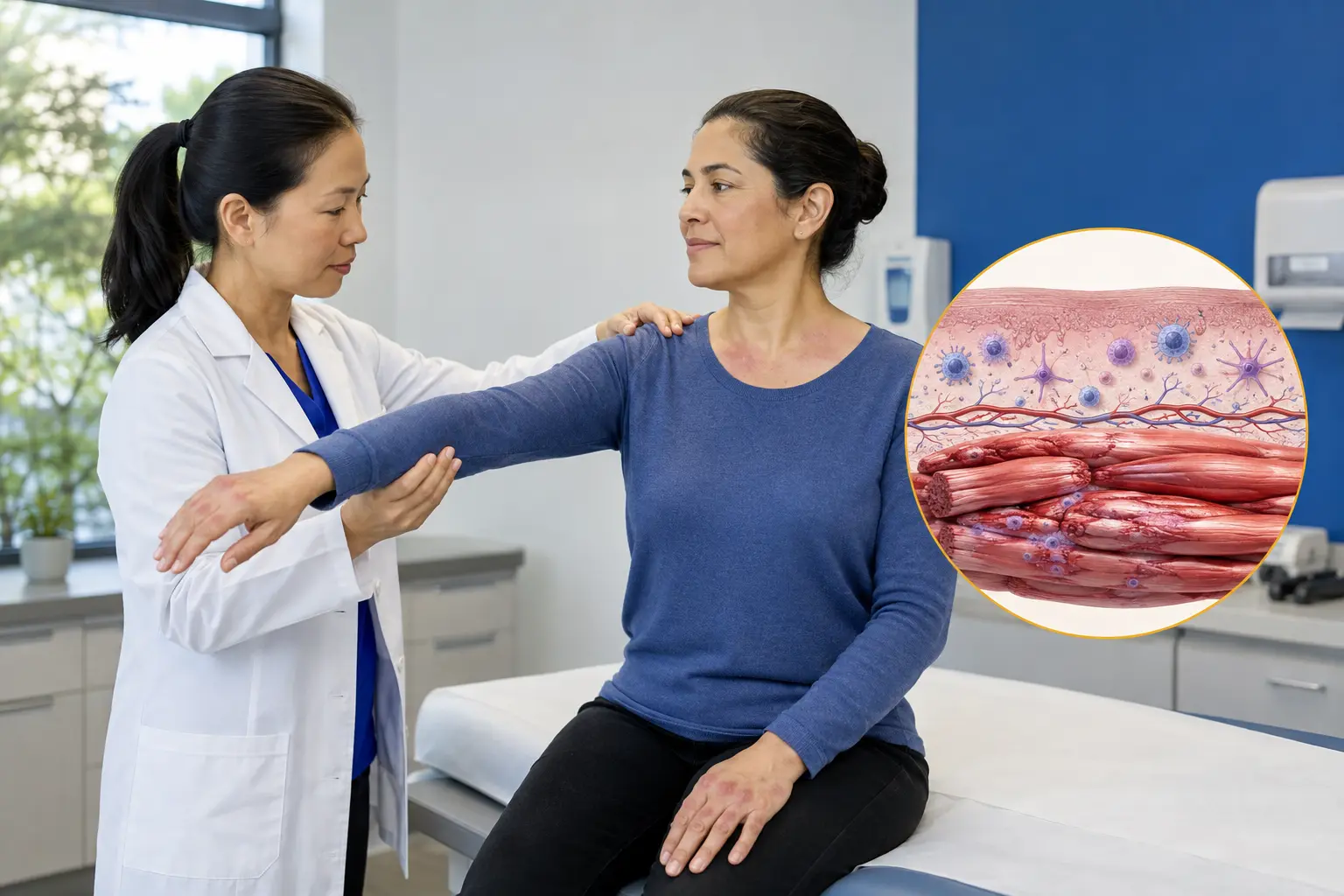
About dermatomyositis
Dermatomyositis is an inflammatory disease that causes muscle weakness and a characteristic skin rash. It requires medical evaluation and ongoing care.
What can cause it?
Dermatomyositis is an autoimmune inflammatory disease affecting skin and muscles; in adults it can be associated with another connective-tissue disease or cancer.
Lung, swallowing, heart, and calcium-deposit complications may occur.
What a patient may notice
Symptoms vary from person to person. Possible signs may include:
- Gradually worsening weakness in hips, thighs, shoulders, or neck
- Purple or red rash around the eyes, knuckles, chest, or back
- Fatigue, trouble swallowing, or shortness of breath
How clinicians find the cause
Evaluation includes strength testing, muscle enzymes, autoimmune blood tests, MRI, electromyography, skin or muscle biopsy, lung testing, and age-appropriate cancer screening.
Treatment and next steps
- 1
Corticosteroids and other immune-modifying medicines reduce inflammation.
- 2
Physical therapy preserves strength; swallowing or lung involvement needs specialist treatment.
- 3
Sun protection helps control rash.
Supporting recovery
- Balance activity with rest and follow a supervised exercise plan.
- Use broad-spectrum sun protection and report choking or breathlessness promptly.
What to expect
Dermatomyositis is often a long-term condition, but treatment can improve muscle strength and control the rash. Improvement may take months, and some people experience relapses or need ongoing immune-modifying treatment. Regular follow-up helps the care team monitor swallowing, lung and heart health, treatment effects, and age-appropriate cancer screening.
Possible complications
- Swallowing weakness, choking, aspiration, or poor nutrition
- Interstitial lung disease, breathing-muscle weakness, or heart involvement
- Calcium deposits, joint contractures, infection, medicine side effects, or an associated cancer in some adults
When to Contact a Medical Professional
Arrange an evaluation when symptoms are new, worsening, interfering with normal activities, or not improving as expected.
Emergency care is needed for trouble breathing or swallowing, choking, chest pain, severe weakness, or a rapid decline.Get emergency help for severe trouble breathing, new chest pressure, fainting, seizure, sudden weakness on one side, uncontrolled bleeding, blue or gray lips, or a person who is difficult to wake.
Ways to lower risk
- The disease cannot be prevented, but treatment and sun protection reduce complications.
- Keep vaccination and infection-prevention plans current with the specialist.
Trusted health information
This CHS patient-education page uses original wording and links to MedlinePlus for additional information.